December 3: wolves could lose federal protection.Dec 3 decisionSend the letter to Congress →
Partner toolkit

The report card, ready to post.

Everything you need to post it, share it or put your name on it. Free to download. Nothing to sign.

Built for partner organizations and open to anyone. Forty graphics with a caption for each set, an editable card you can put your logo on, and the agency and governor accounts for all ten states.

What this is

One standard. Ten states.

Wolves have re-established populations in ten states, back from fewer than 500 in the lower 48 in 1973 to roughly 8,000 today. As federal protection comes off, what happens to them next falls to state wildlife agencies.

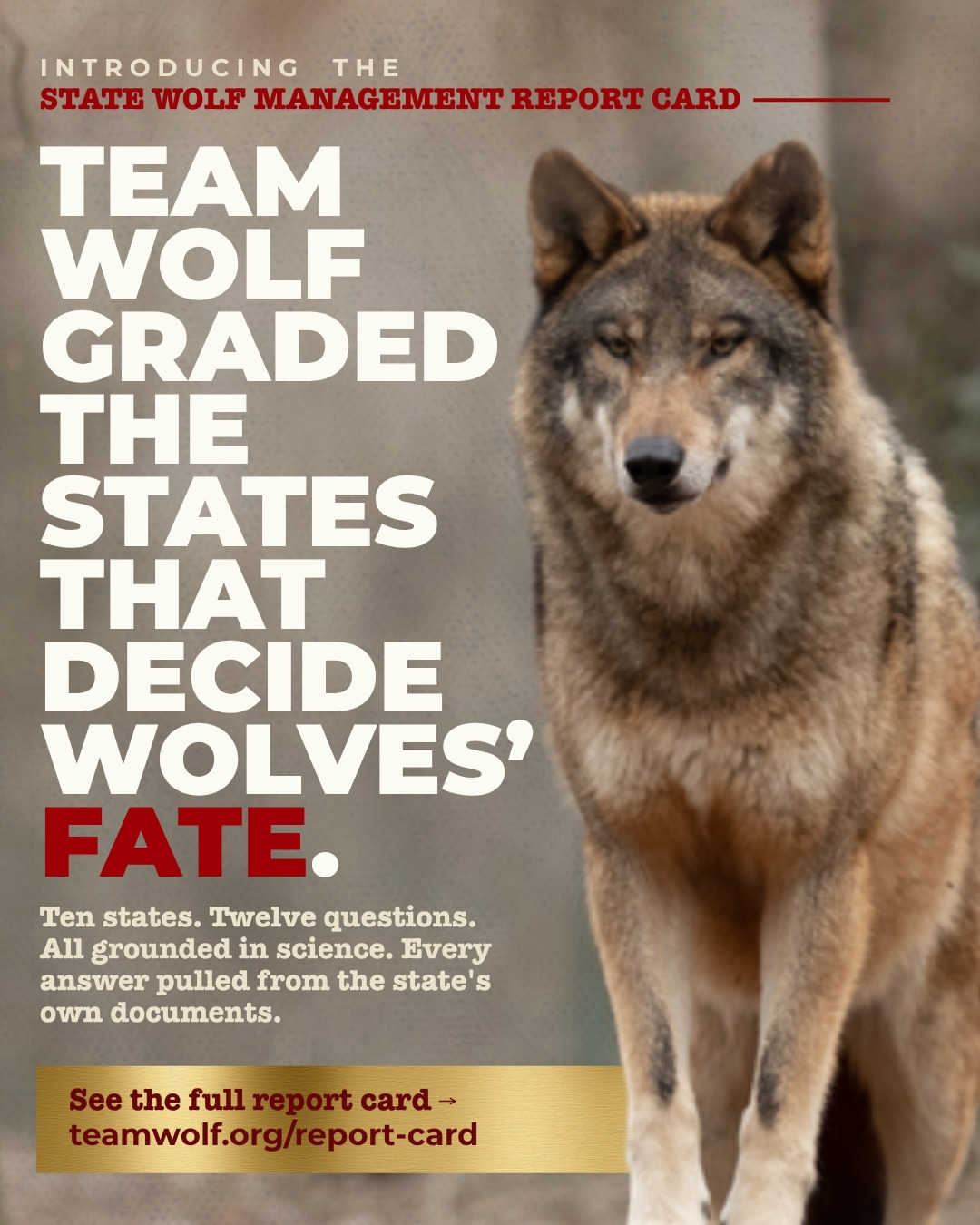
Team Wolf built the State Wolf Management Report Card to hold those states to account. Twelve practices, the same twelve for every state, scored against nothing but what each state has published itself.

Ethical & Humane

No trapping, snaring or poison. No recreational hunt. Lethal control only as a last resort. Ranchers paid when wolves take stock.

Transparency

Published budgets, kill numbers and livestock losses, public hearings, and a person the public can actually reach.

Science-Based

Independent review of the plan, honest population counts, research into nonlethal methods, and goals that value wolves.

Why we built it

As wolves face the loss of federal protection, it falls to the states to look after them. The report card shows where each state stands, what separates a strong plan from a weak one, and what it would take to improve. We intend to run it again.

Reaching more people is how we get the agencies’ attention. We want them caring what grade they get next year.

Where the ten states landed

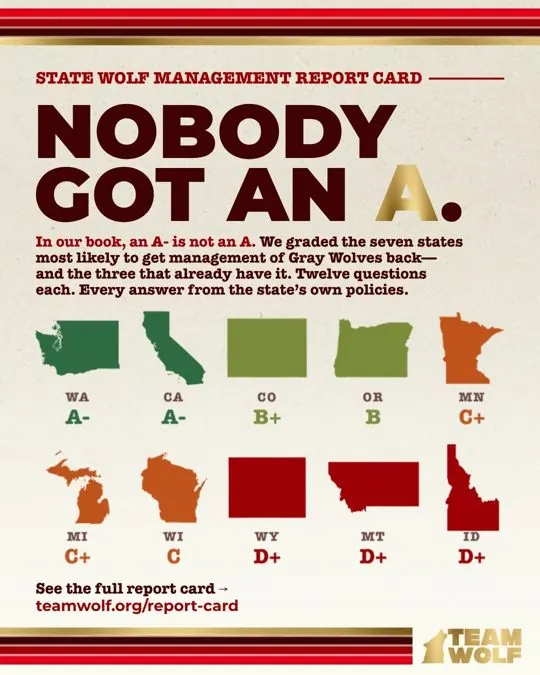
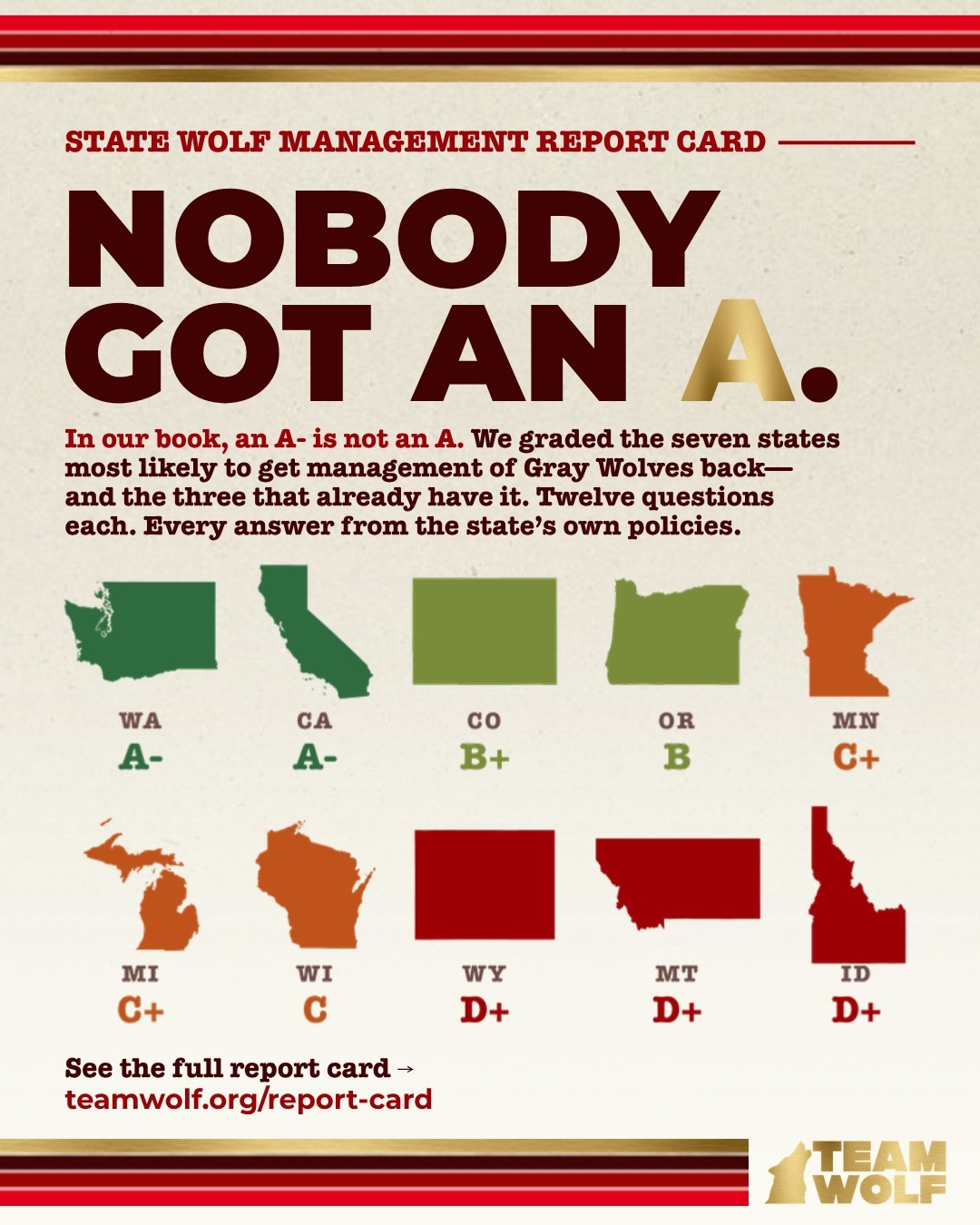
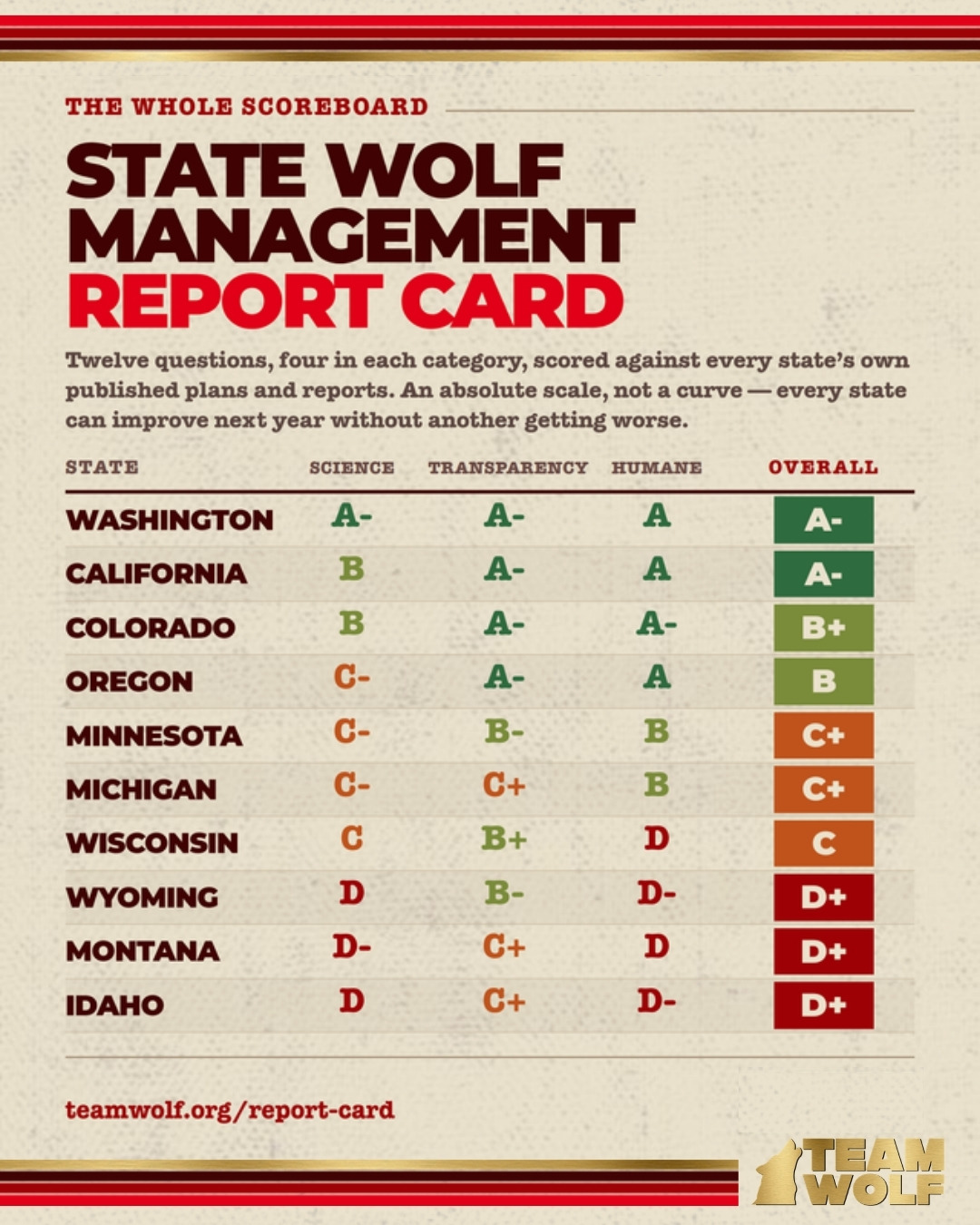
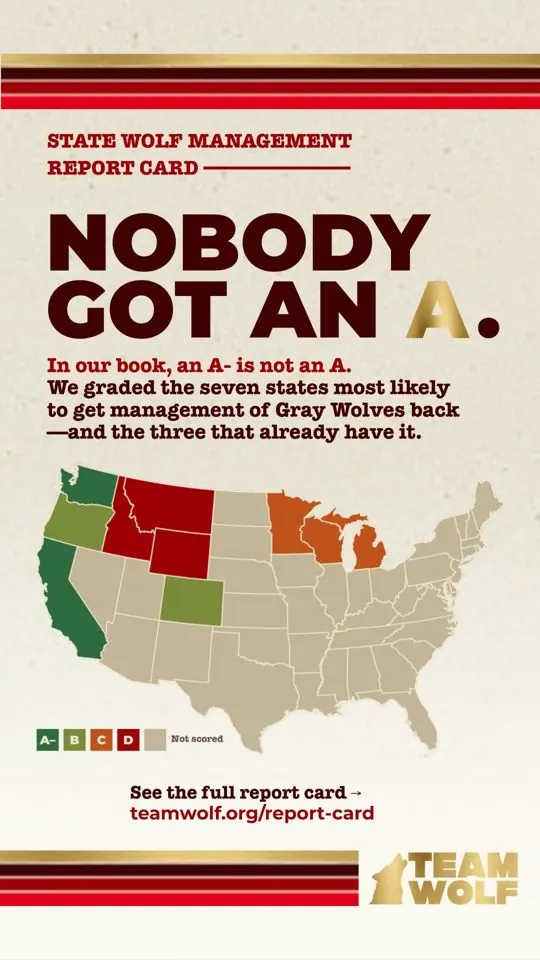
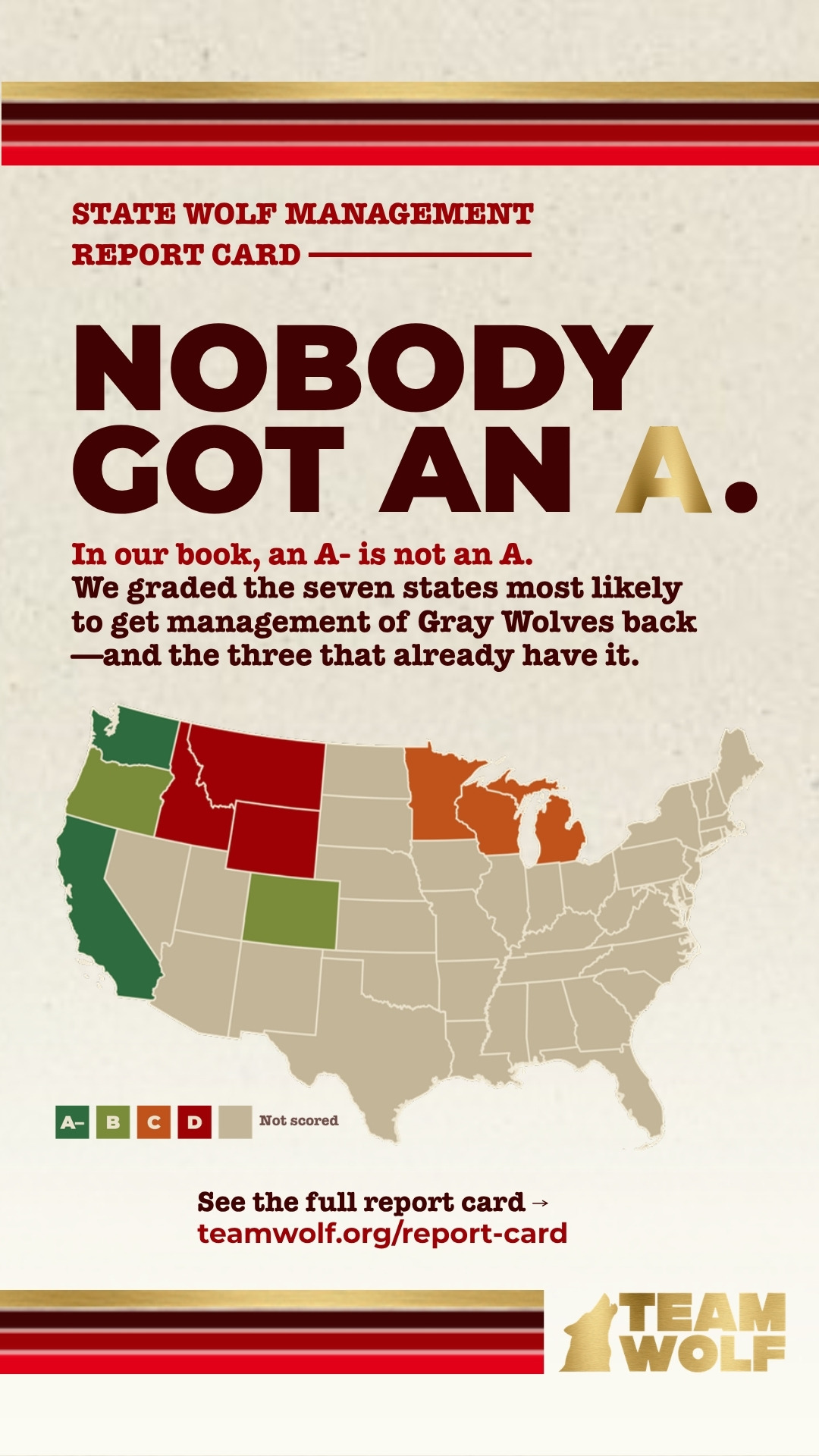
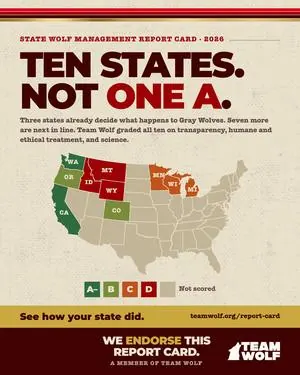
Nobody earned an A.

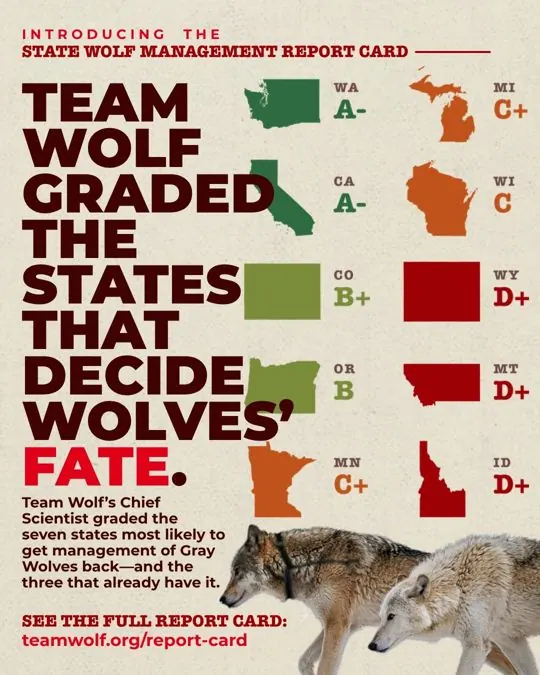
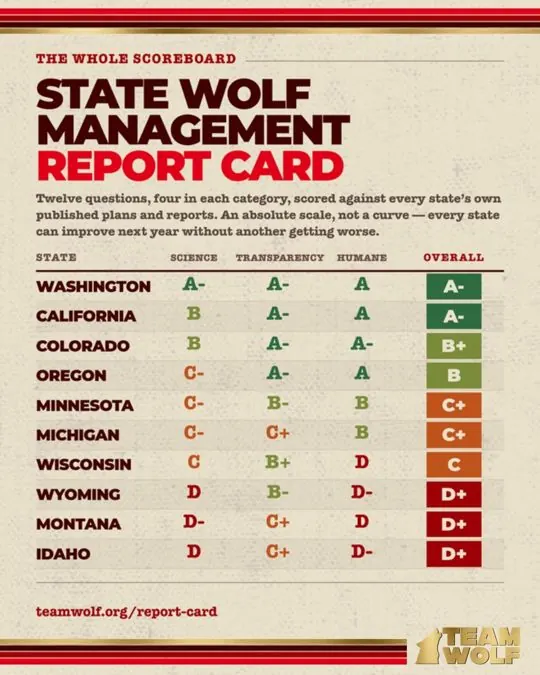
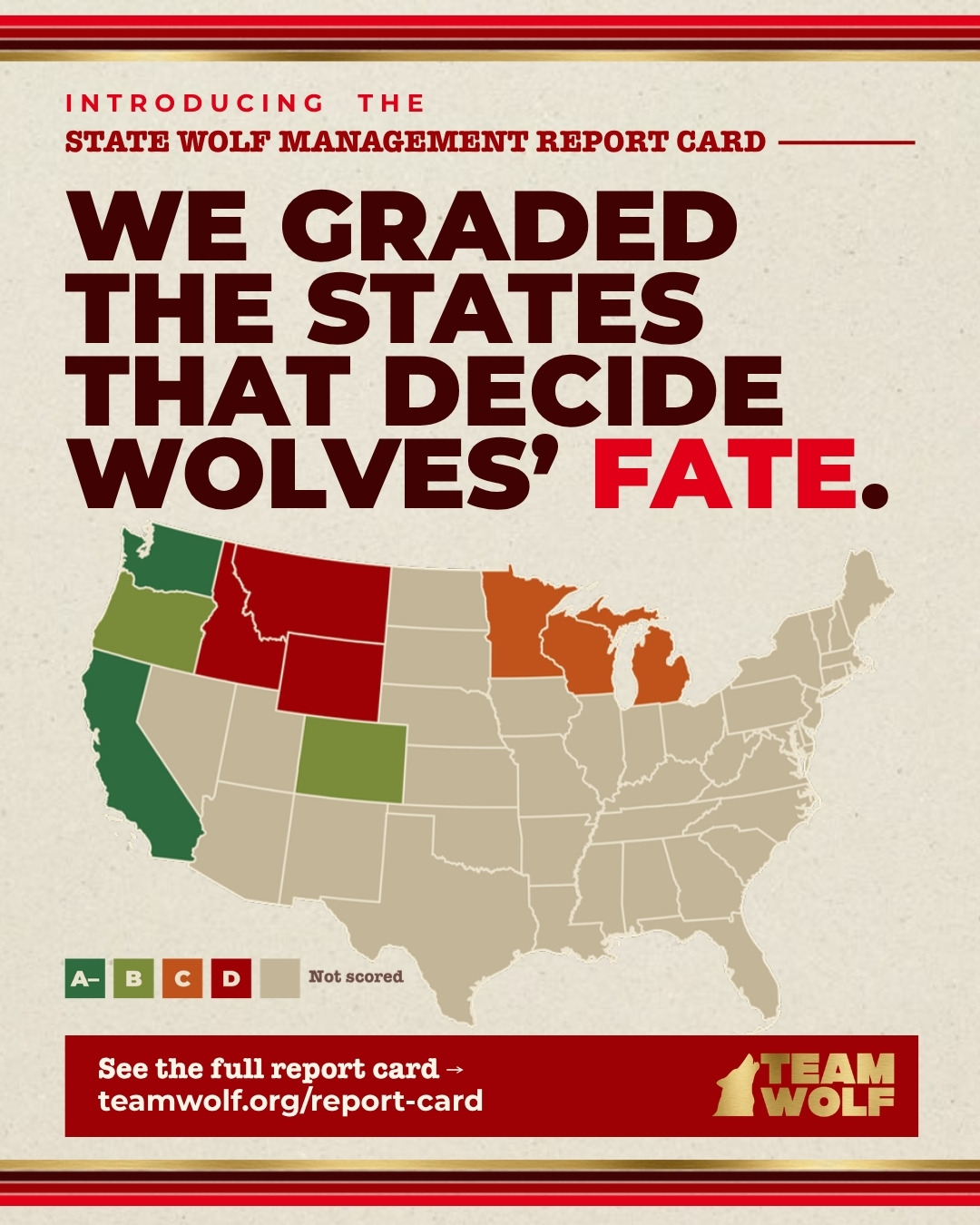
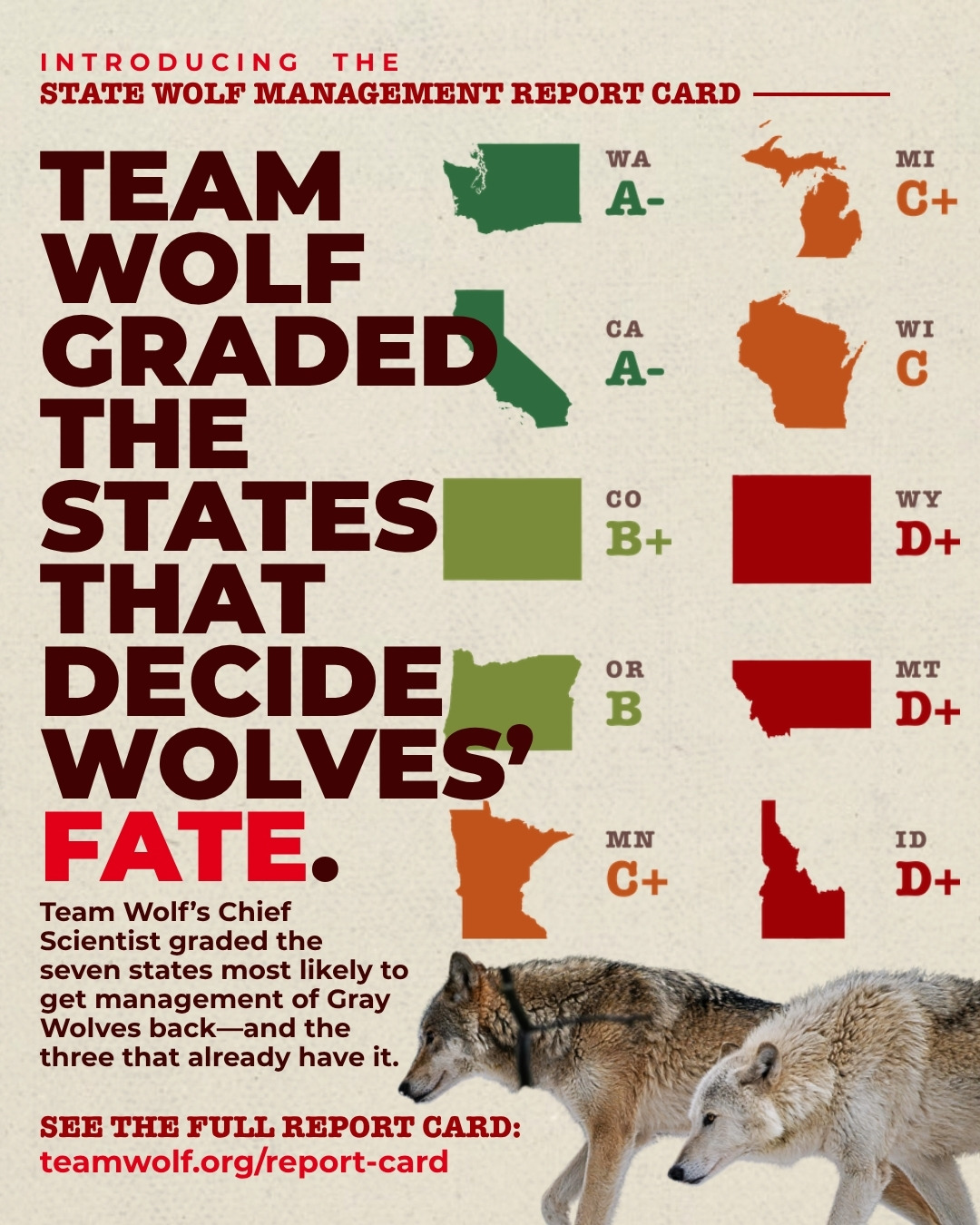
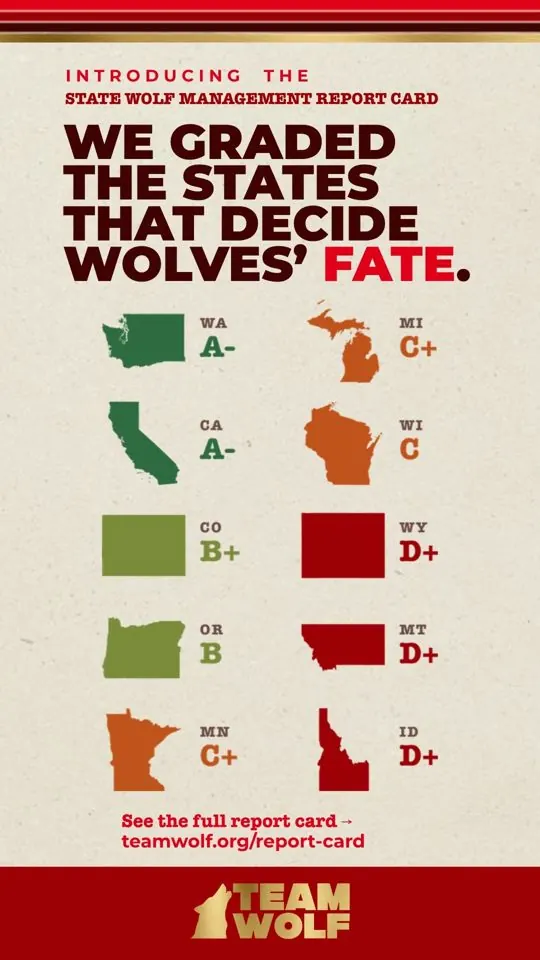
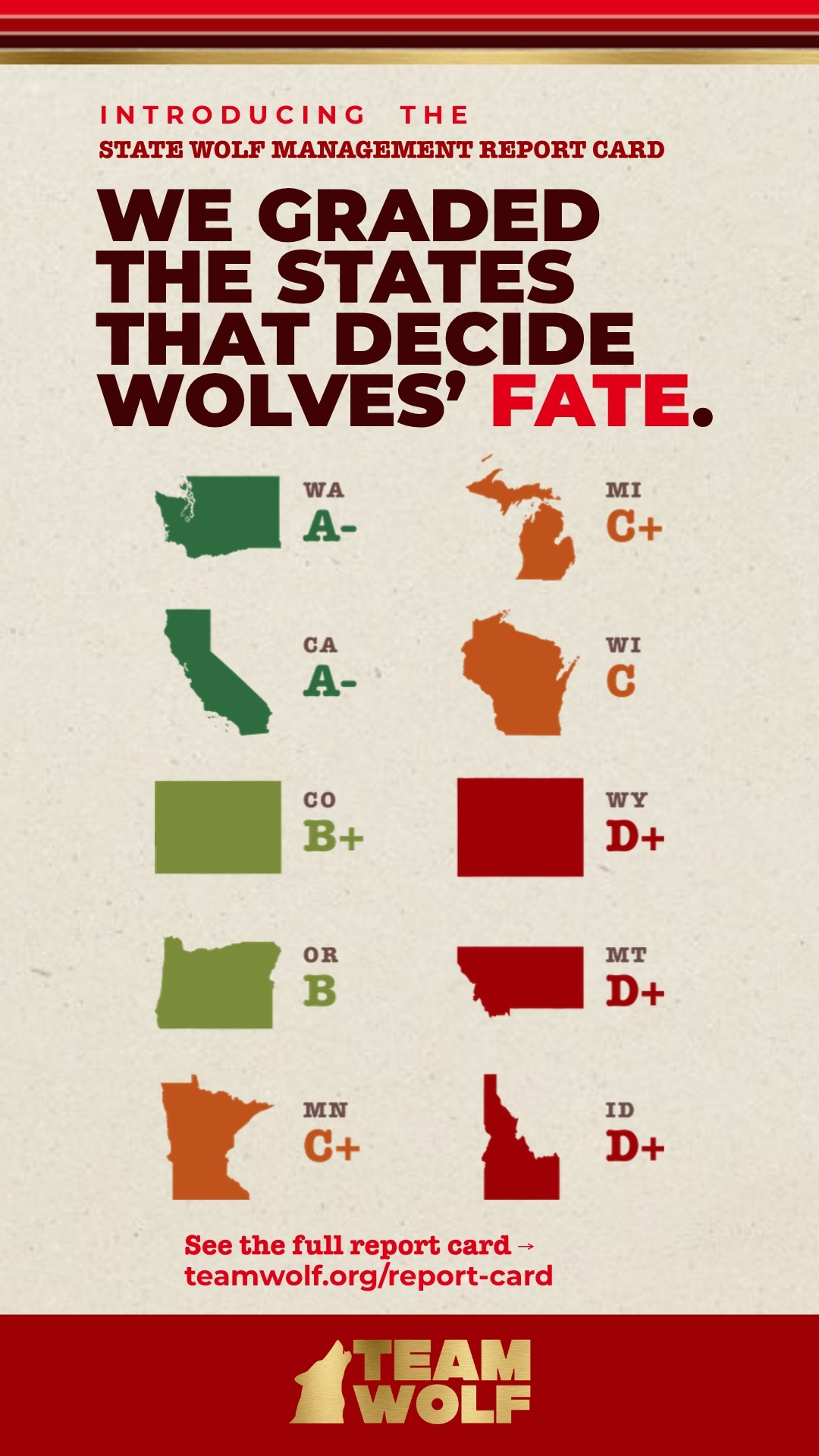
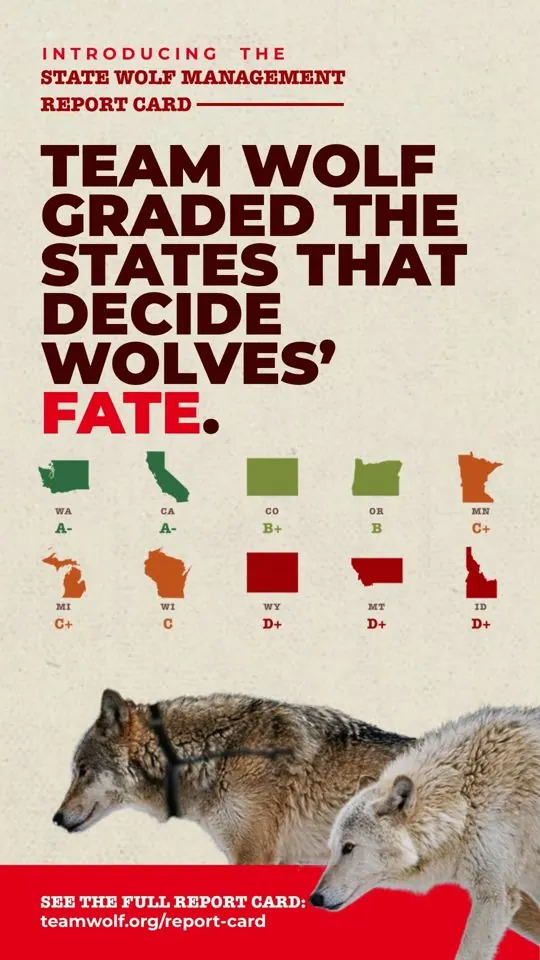
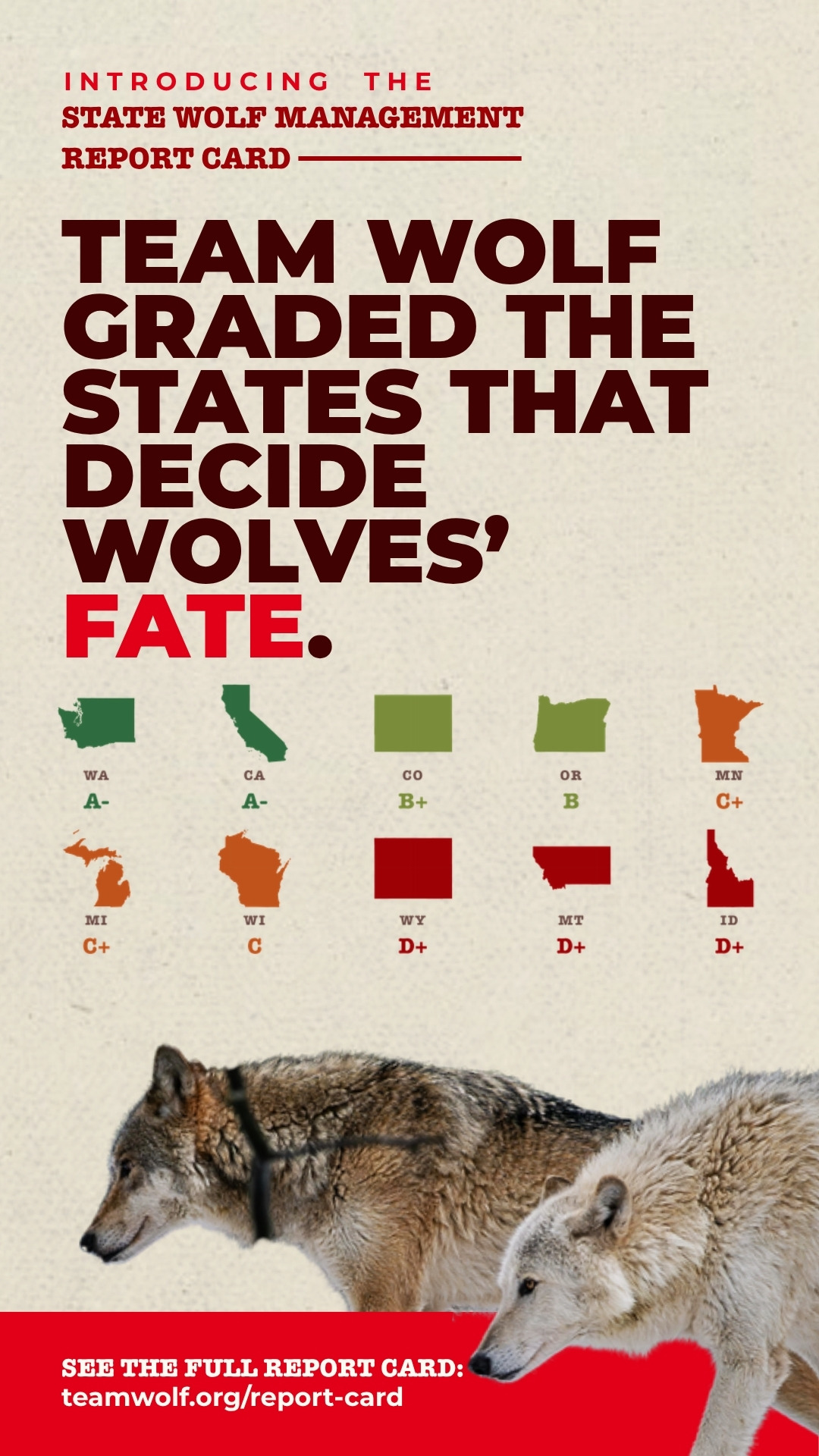
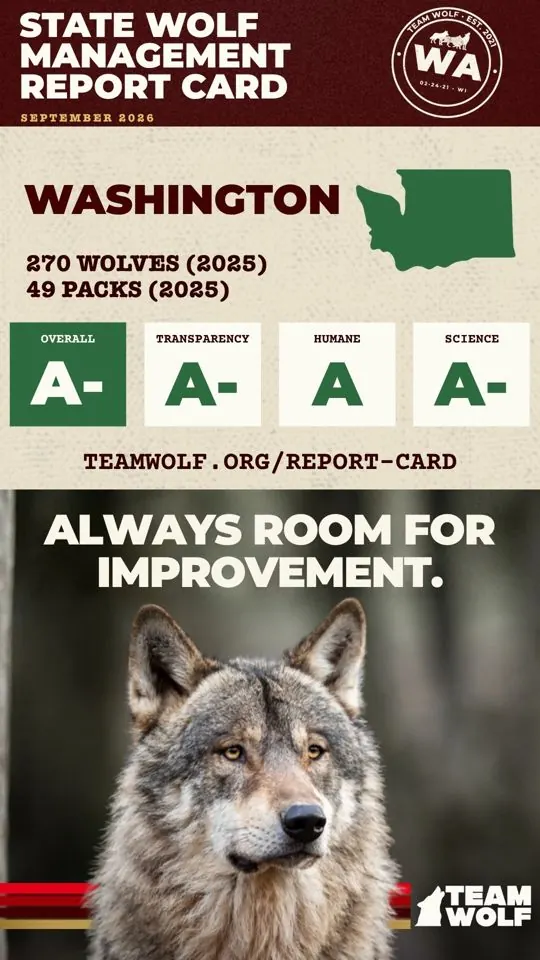
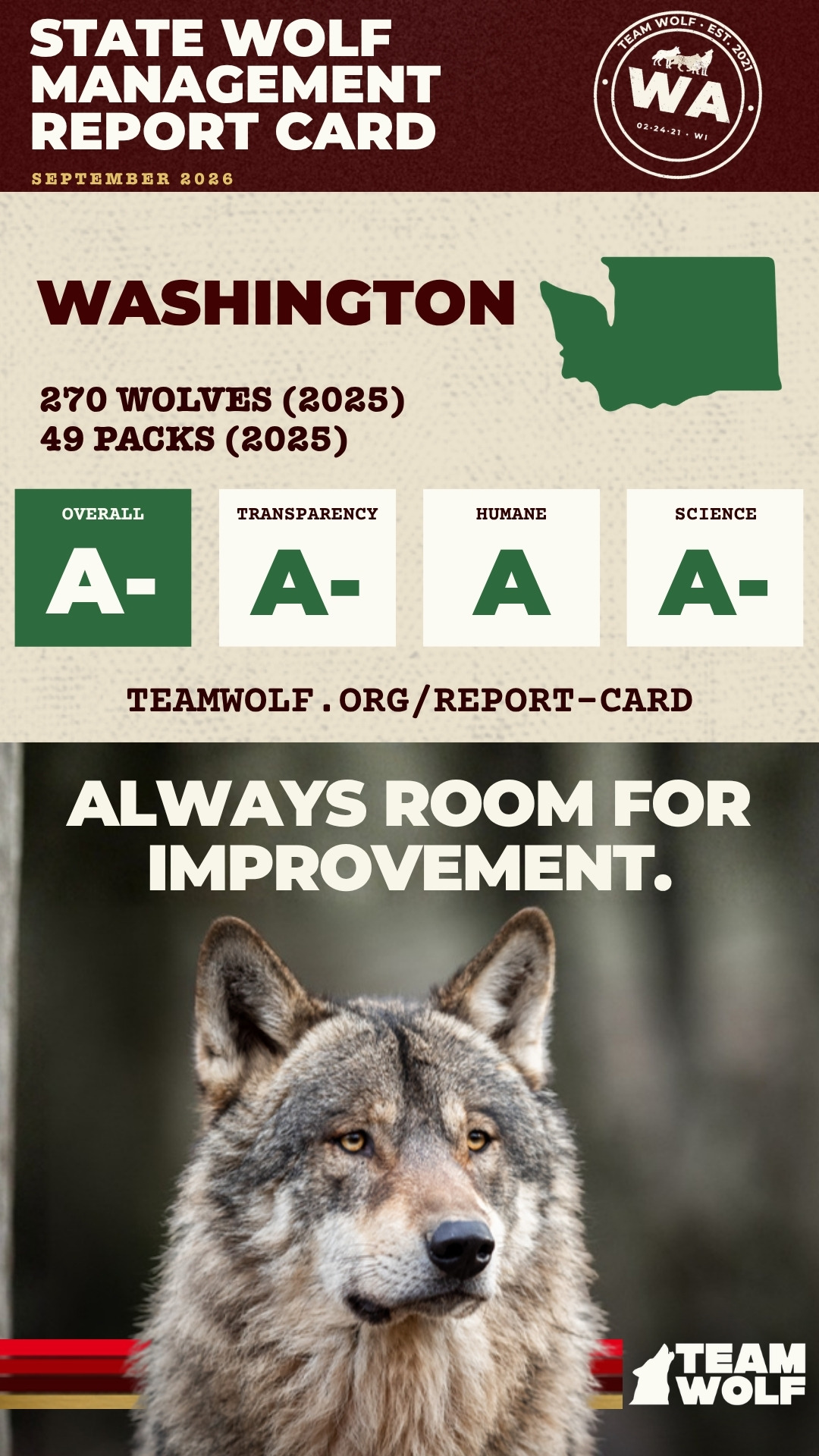
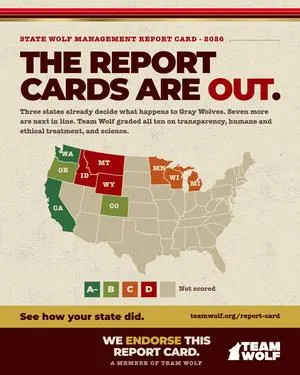
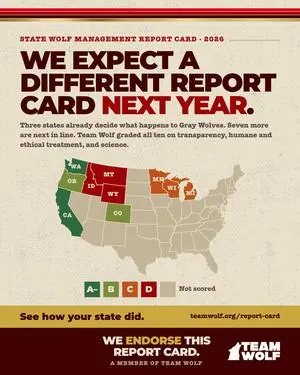
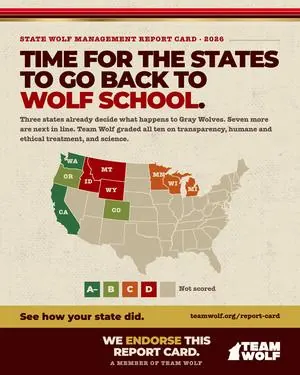
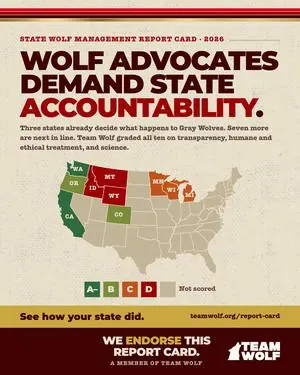
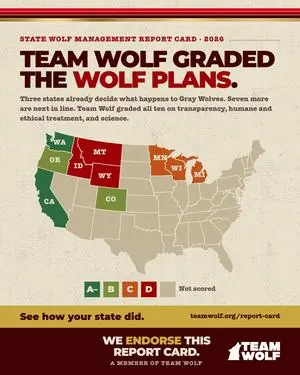
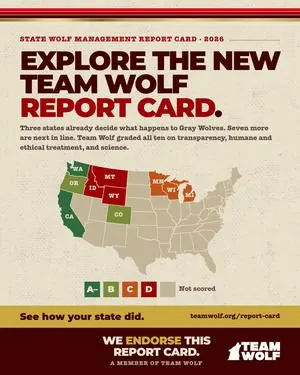
Washington and California came closest at A−. Idaho, Montana and Wyoming, the three states that already decide, are the three lowest.

Every score and its source →

Social toolkit

Post it in one click.

Pick a platform, edit anything you like, and post it from your own account. The wording is already written.

Open the social toolkit ↗

Scheduling in your own tool instead? Every graphic and caption is below.

Ready-to-post graphics

Forty graphics. Pick yours.

Feed posts at 1080×1350 and stories at 1080×1920, grouped by what they do. You don’t need all of them. Each set has a caption you can paste as is or rewrite in your own voice.

The announcement

Any one of these works alone. Pick the one that fits your feed.
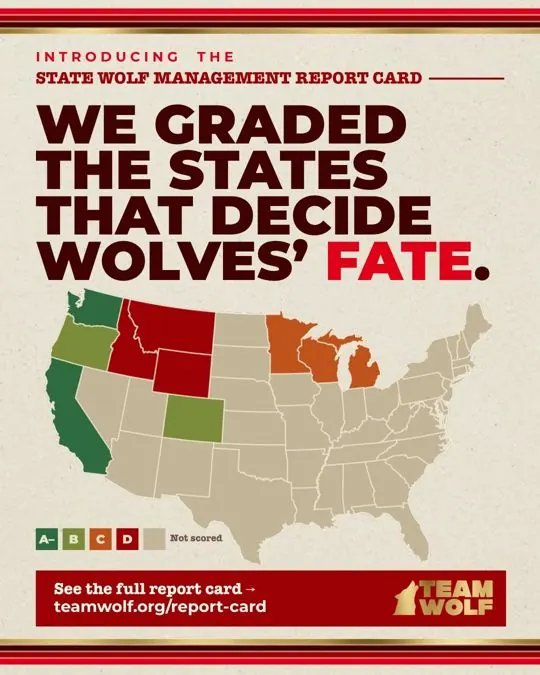
The map, all ten states
Download
Nobody got an A
Nobody got an A
Download
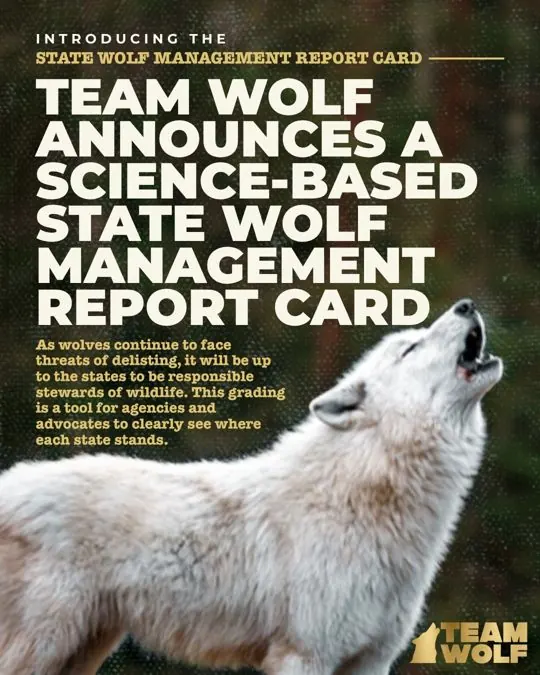
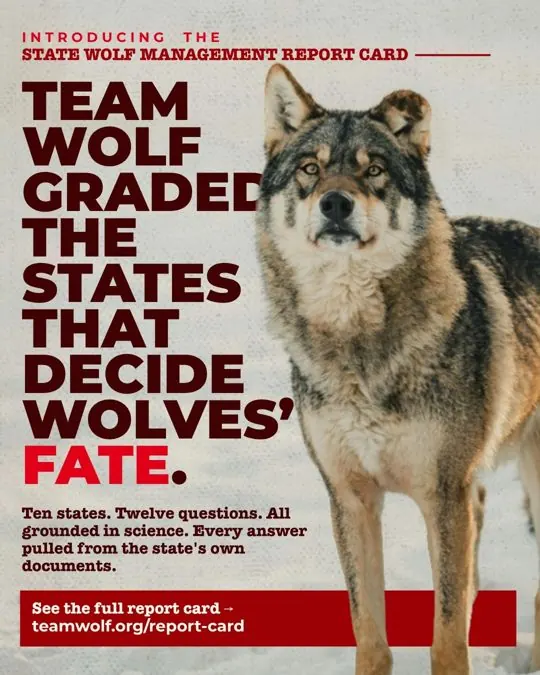
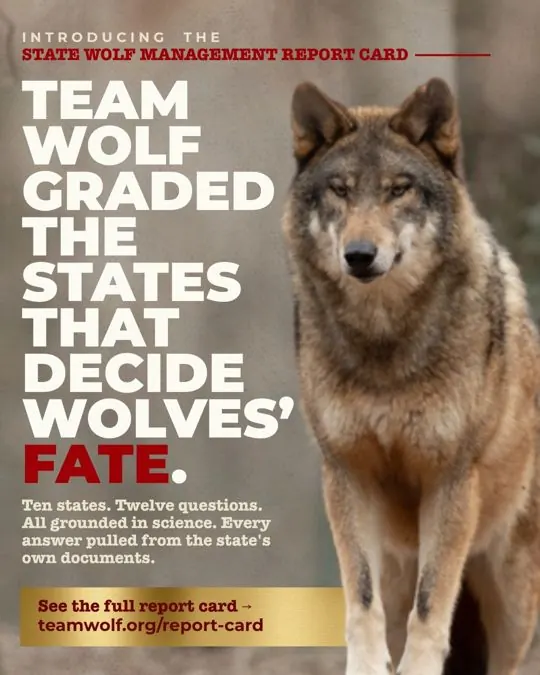
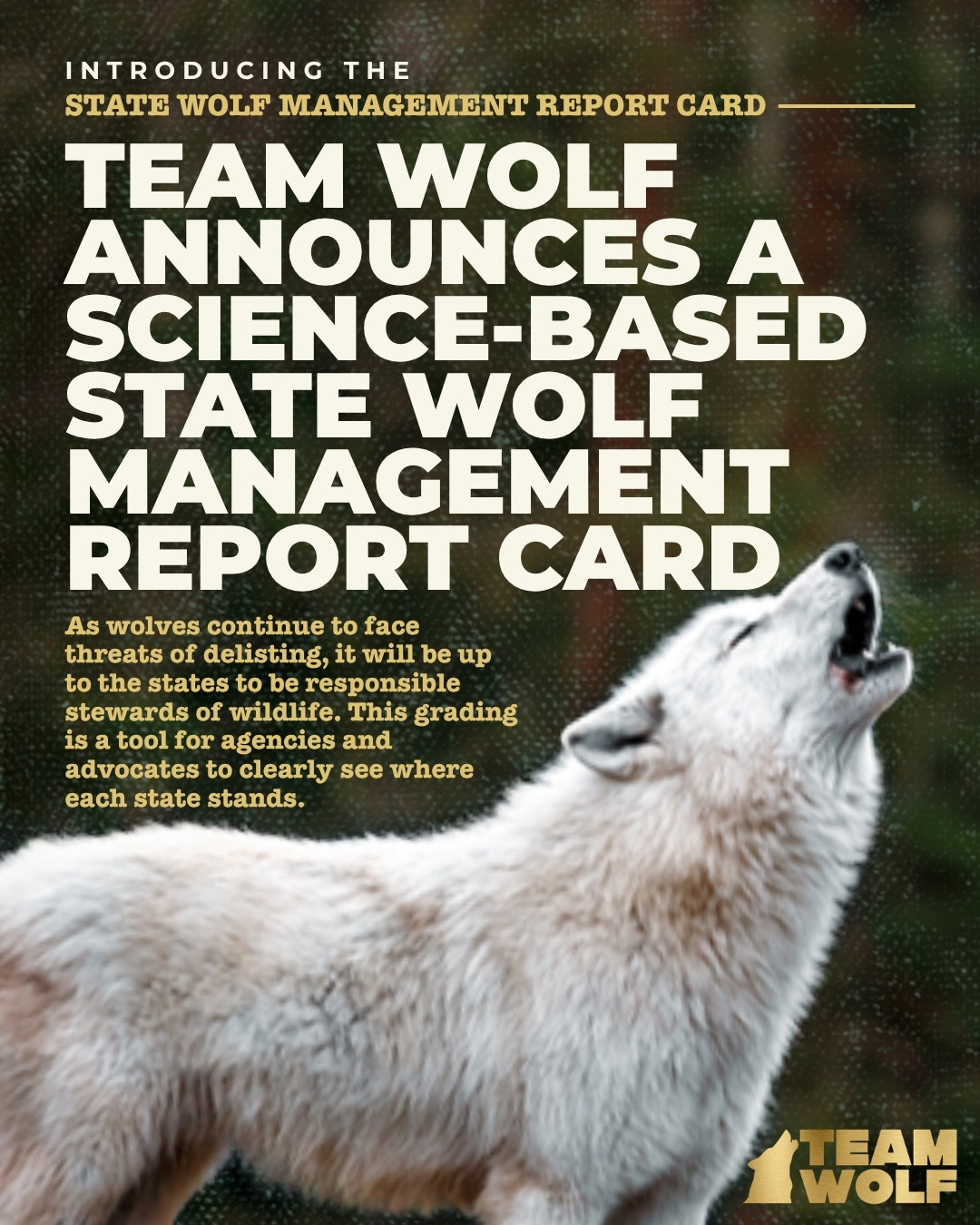
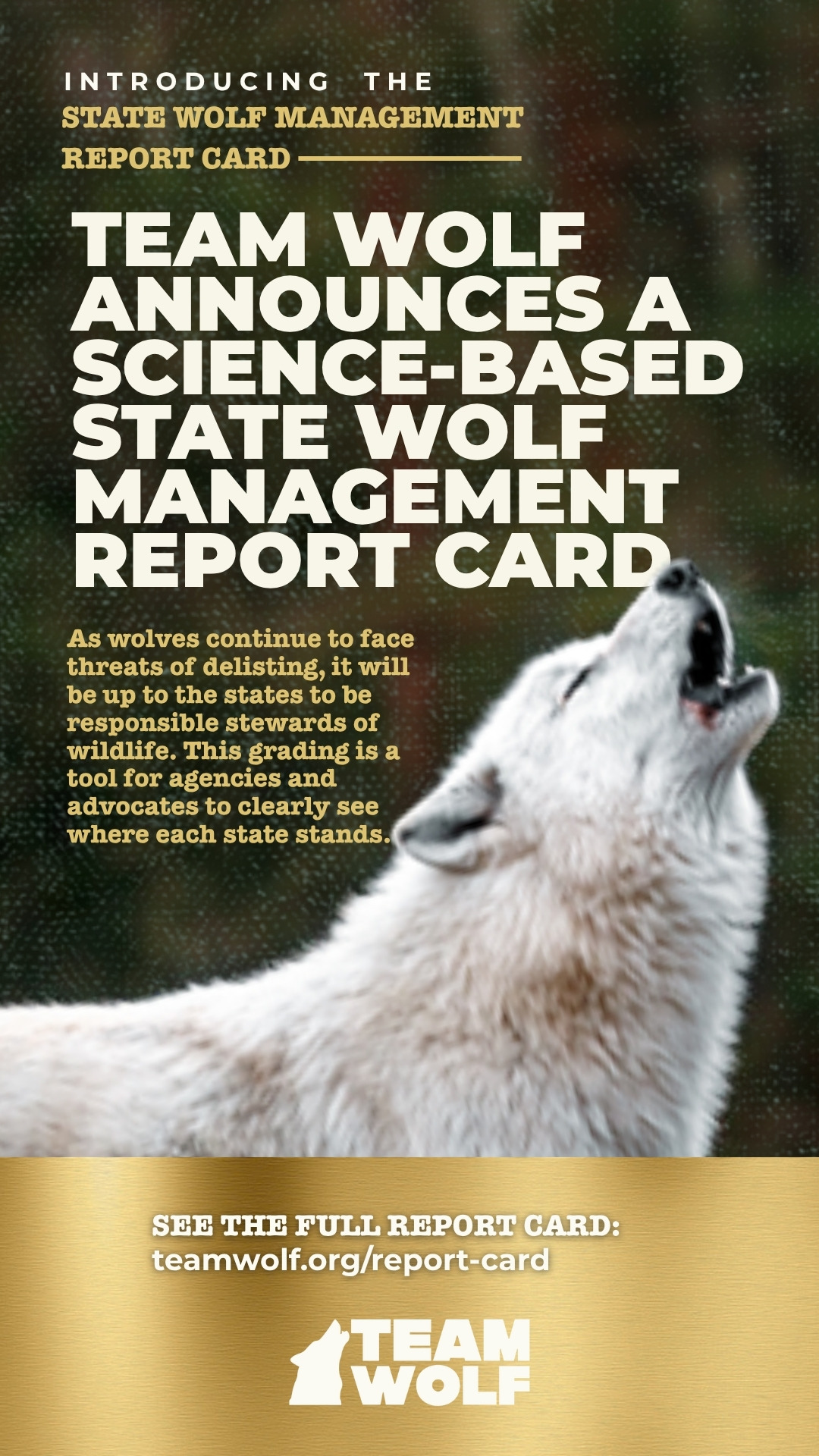
The formal announcement
Download
Suggested caption
Wolves have re-established populations in ten states—back from fewer than 500 in the lower 48 in 1973 to roughly 8,000 today. As federal protection comes off, what happens to them next falls to state wildlife agencies. Team Wolf graded all ten: twelve questions each, on science, transparency and humane treatment, every answer pulled from the state's own documents. Not one state earned an A. Look up yours—link in bio.

How it was graded

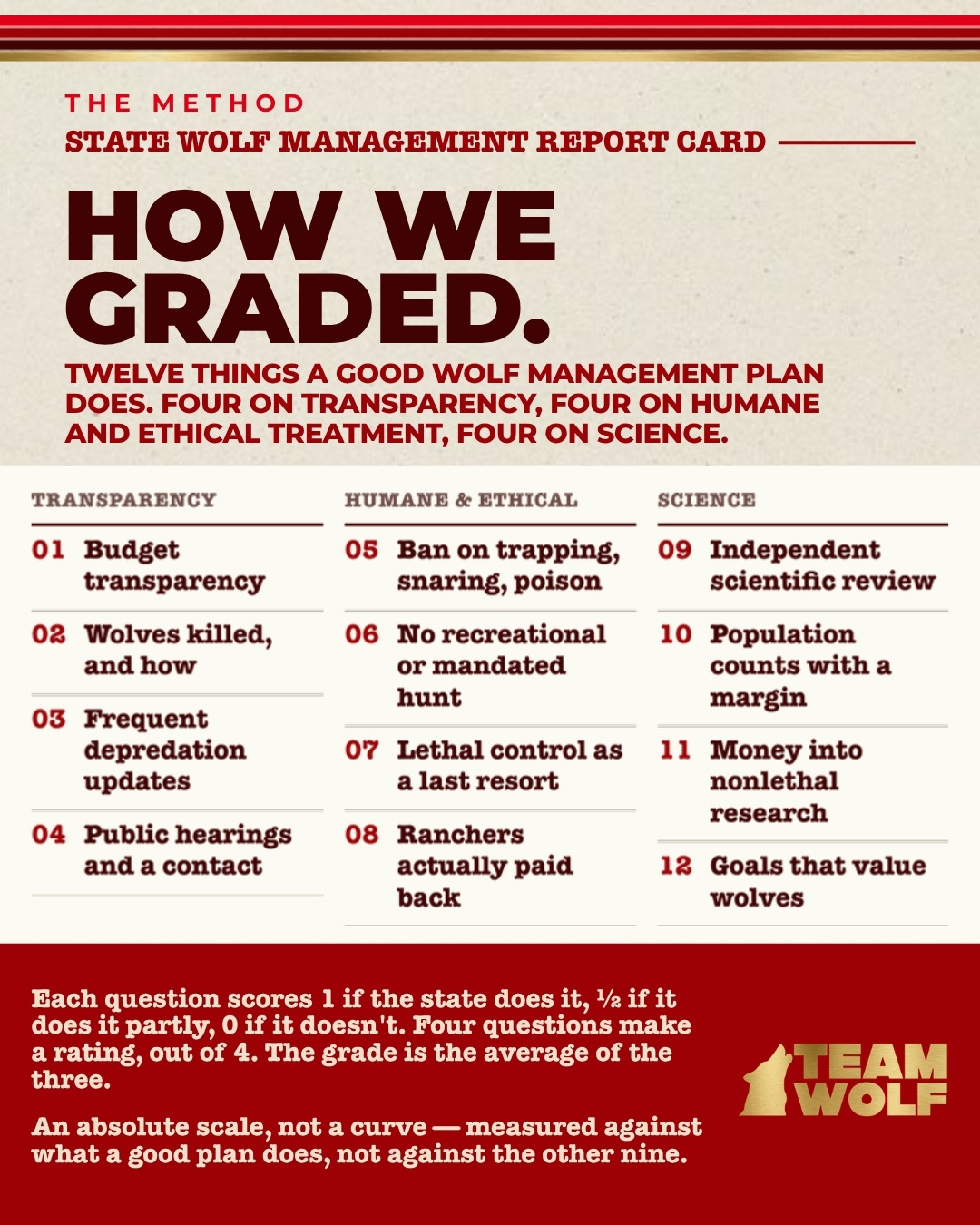
Answers the first question anyone asks: says who?
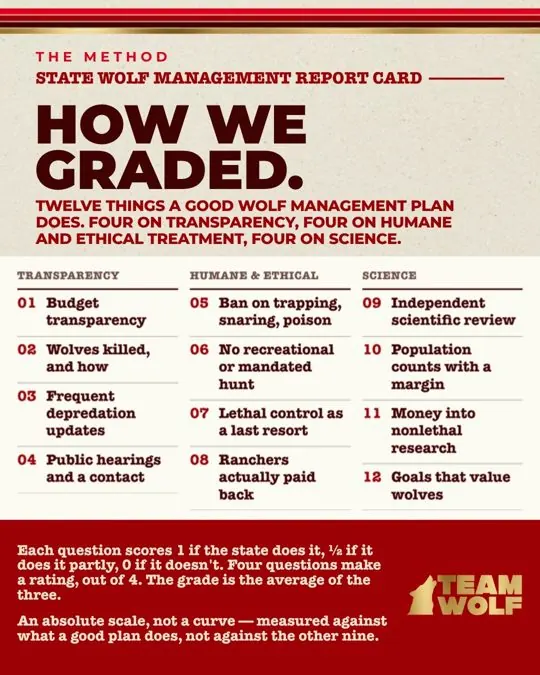
The twelve questions and the scoring
Download
Suggested caption
Says who? Here is the whole method, in public. A good state approach to wolves should be three things: scientifically sound, transparent and open to the public, and humane in how it treats all wildlife. Twelve questions, four on each, scored against the state's own published plans, reports and budgets—1 if it does it, ½ if partly, 0 if not. It is an absolute scale, not a curve. Every state can improve next year without any other state getting worse. All twelve scores and their sources—link in bio.

What it found

The finding, three ways.
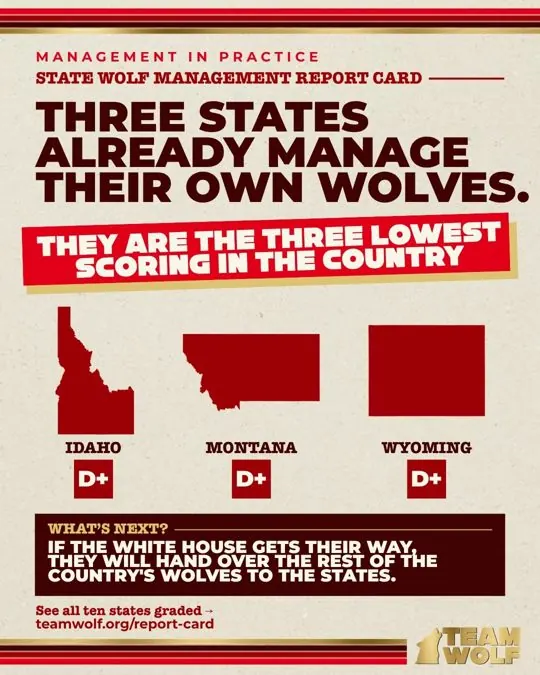
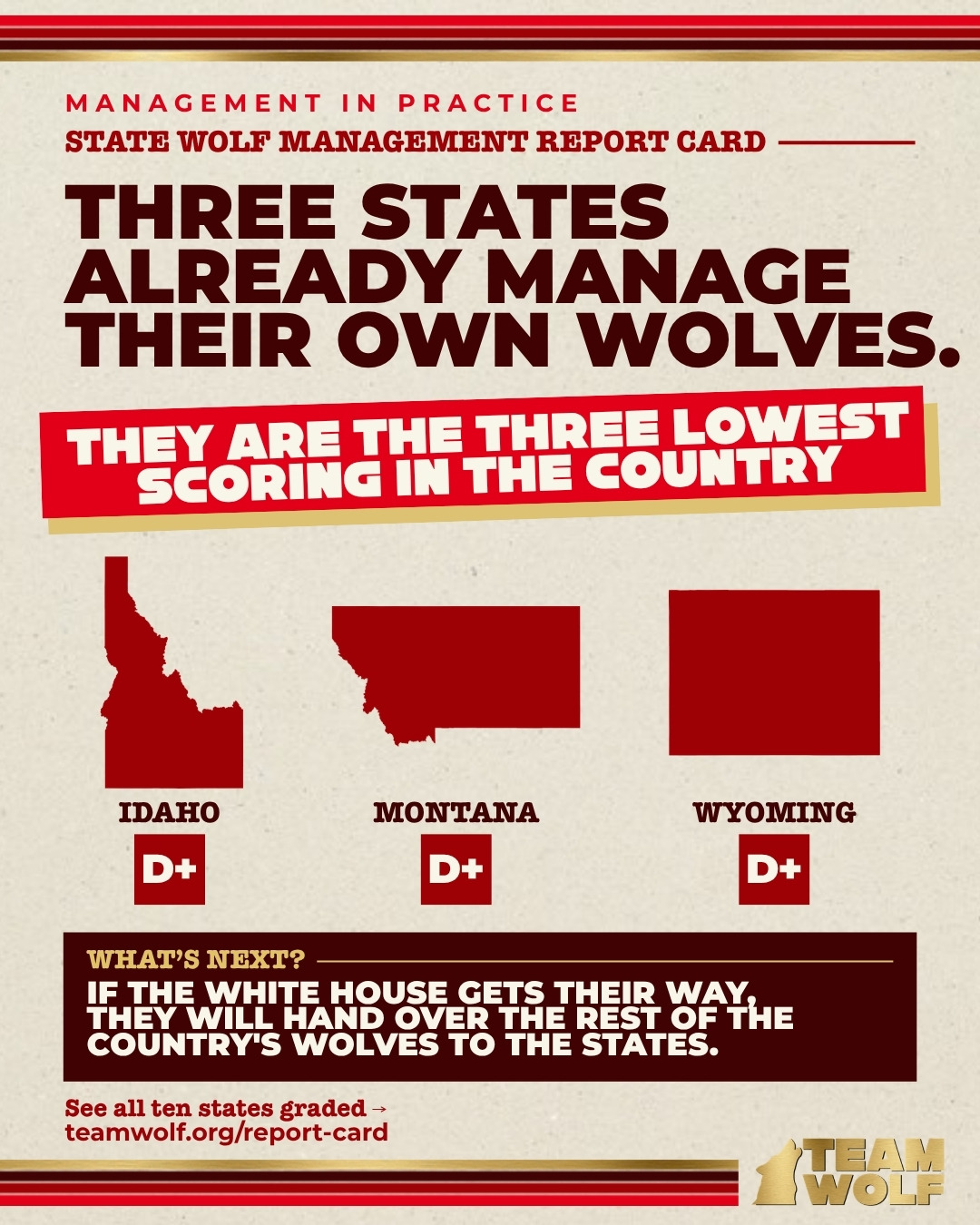
The three states that already decide
Download
Every grade on one card
Download
Every state against every category
Download
Suggested caption
Ten states. Twelve questions. One scale. Washington and California came closest at A−. Idaho, Montana and Wyoming—the three states that already hold the decision—are the three lowest in the country, all at D+. All three allow trapping and snaring, all three run an annual hunt, and in none of them has an independent scientist reviewed the plan. This is not a warning about what could happen if wolves lose federal protection. It is a record of what already happens where they have. Link in bio.

The pattern

For audiences who care about animals generally, not only wolves.
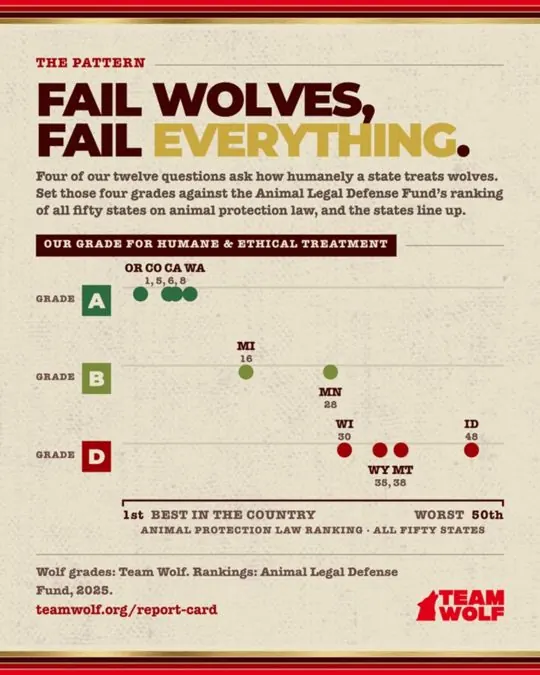
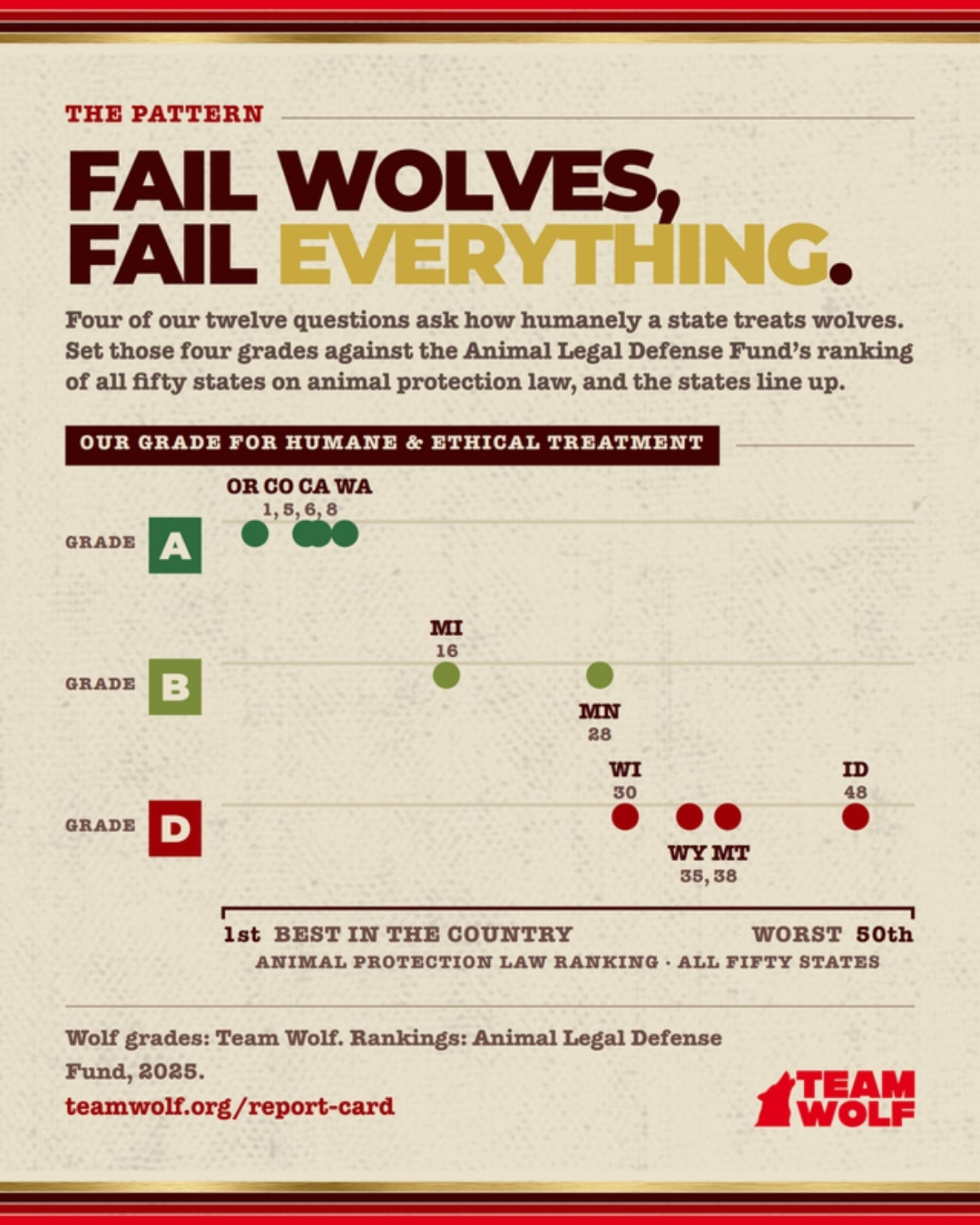
All ten states against the national ranking
Download
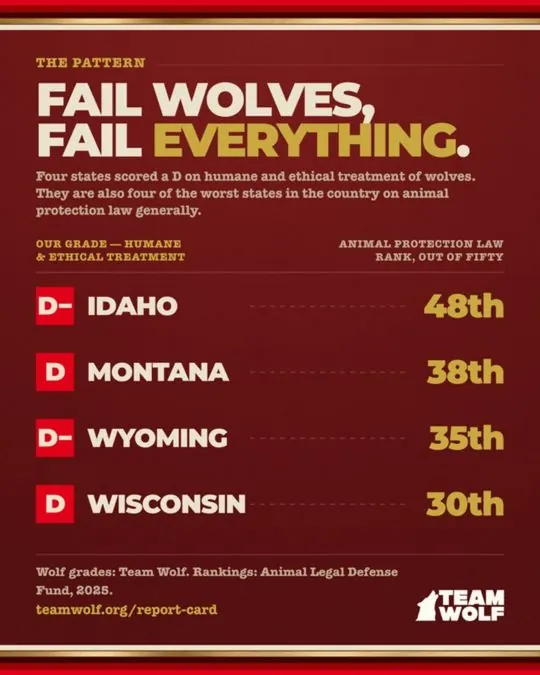
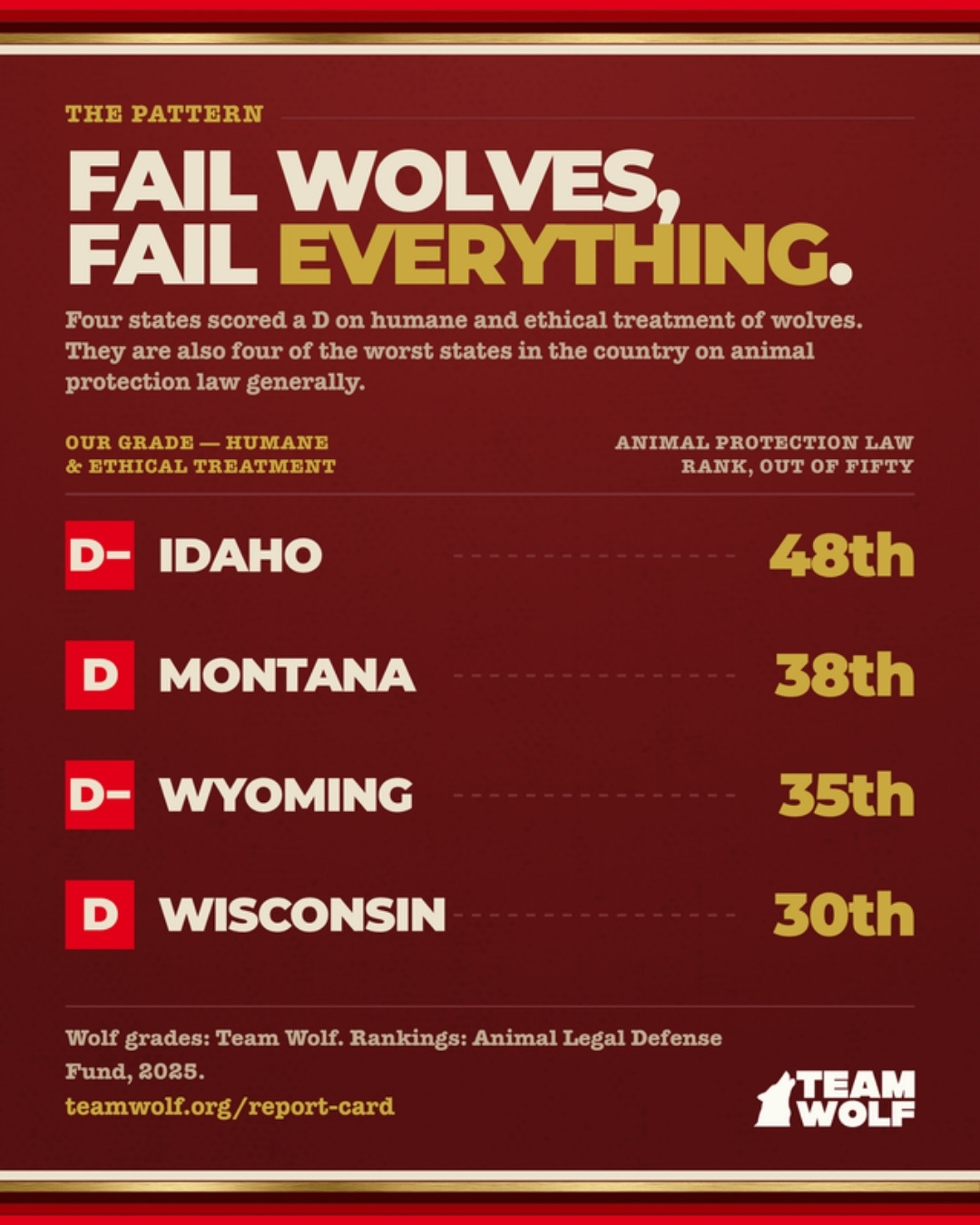
The four worst, side by side
Download
Suggested caption
How a state treats wolves tells you how it treats everything else. Four of the twelve questions ask how humanely a state treats Gray Wolves. Set those grades against the Animal Legal Defense Fund's 2025 ranking of all fifty states on animal protection law, and they line up: the four graded A sit at 1st, 5th, 6th and 8th nationally. The four graded D sit at 30th, 35th, 38th and 48th. Wolf policy is not a niche issue with its own separate politics. It is a symptom. Link in bio.

Photo-led

Three crops of the same message. Use one.
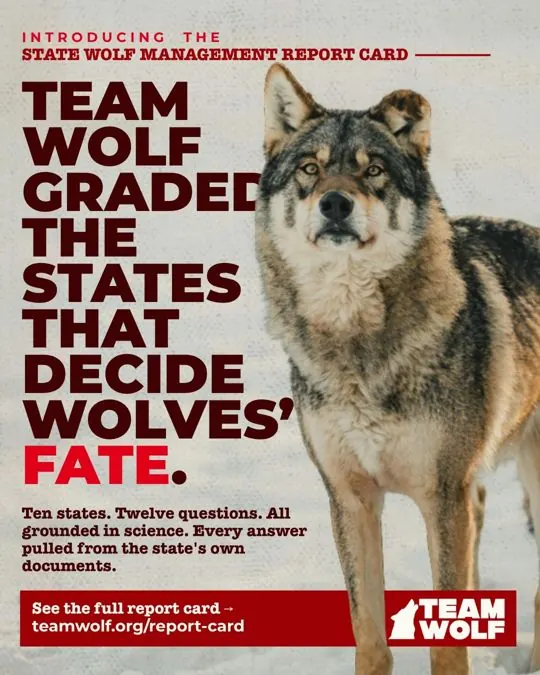
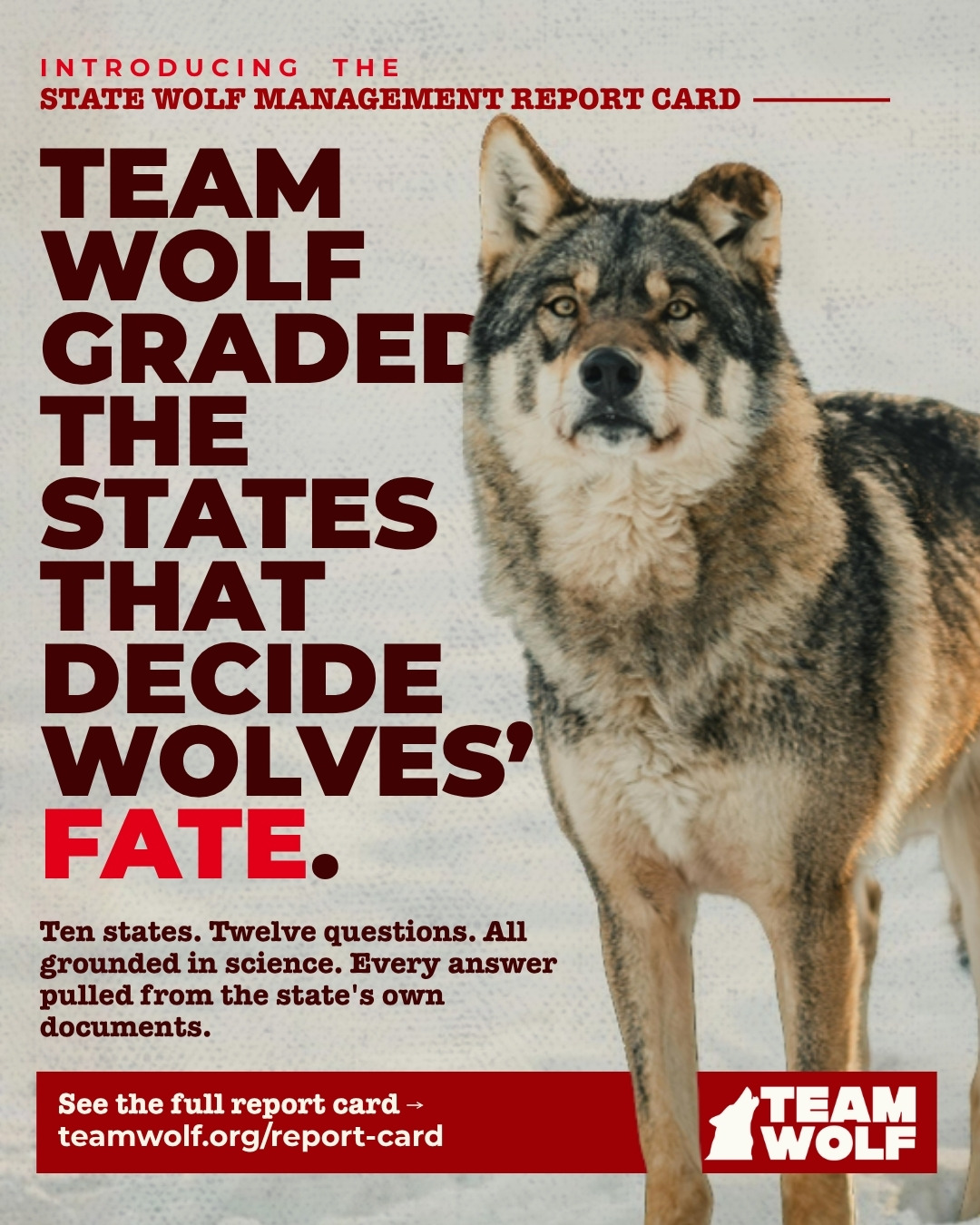
Wolf hero
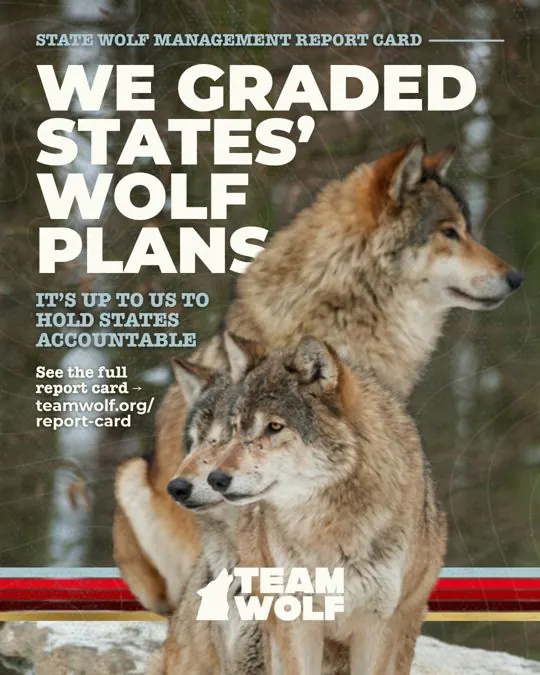
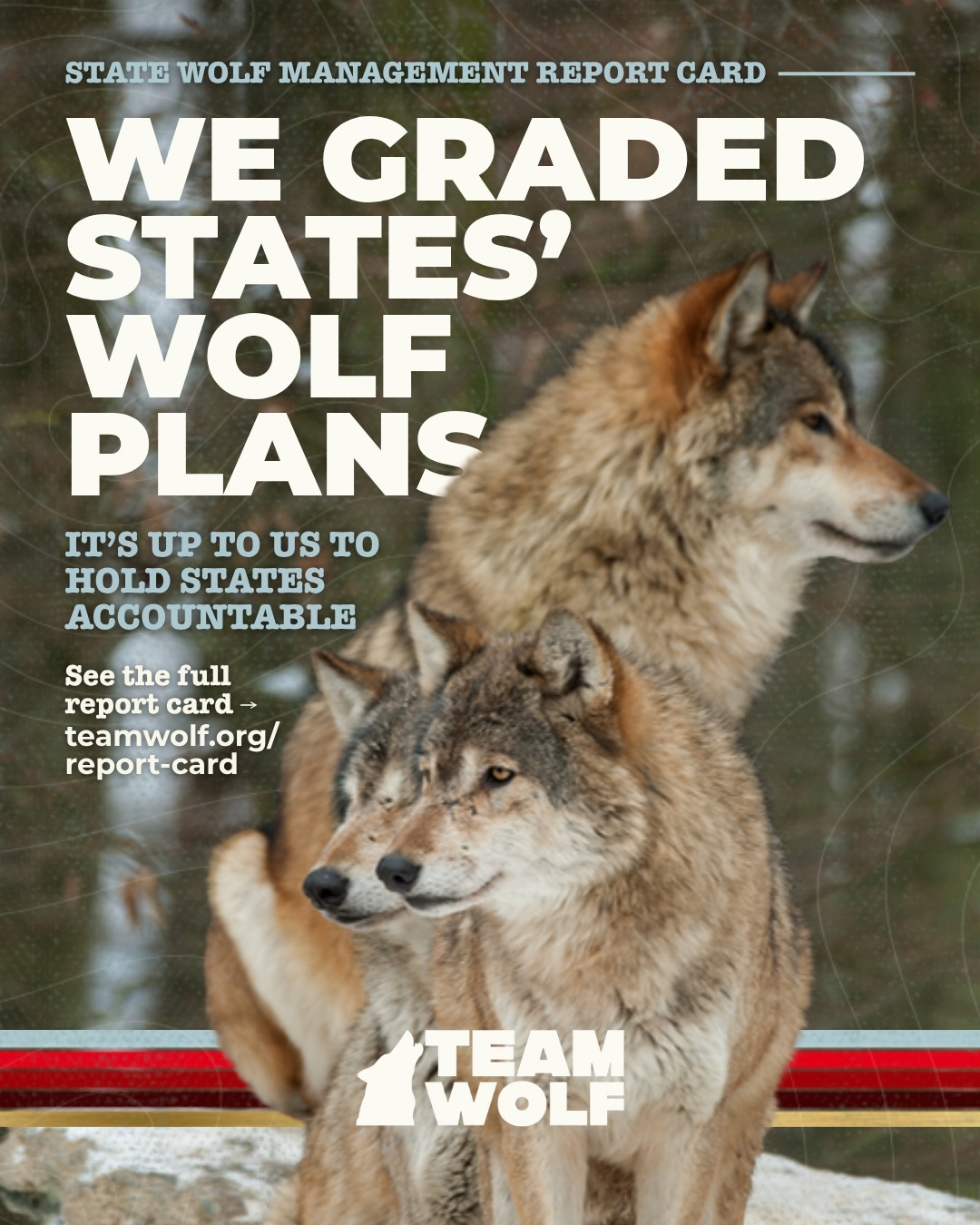
Wolf hero
Download
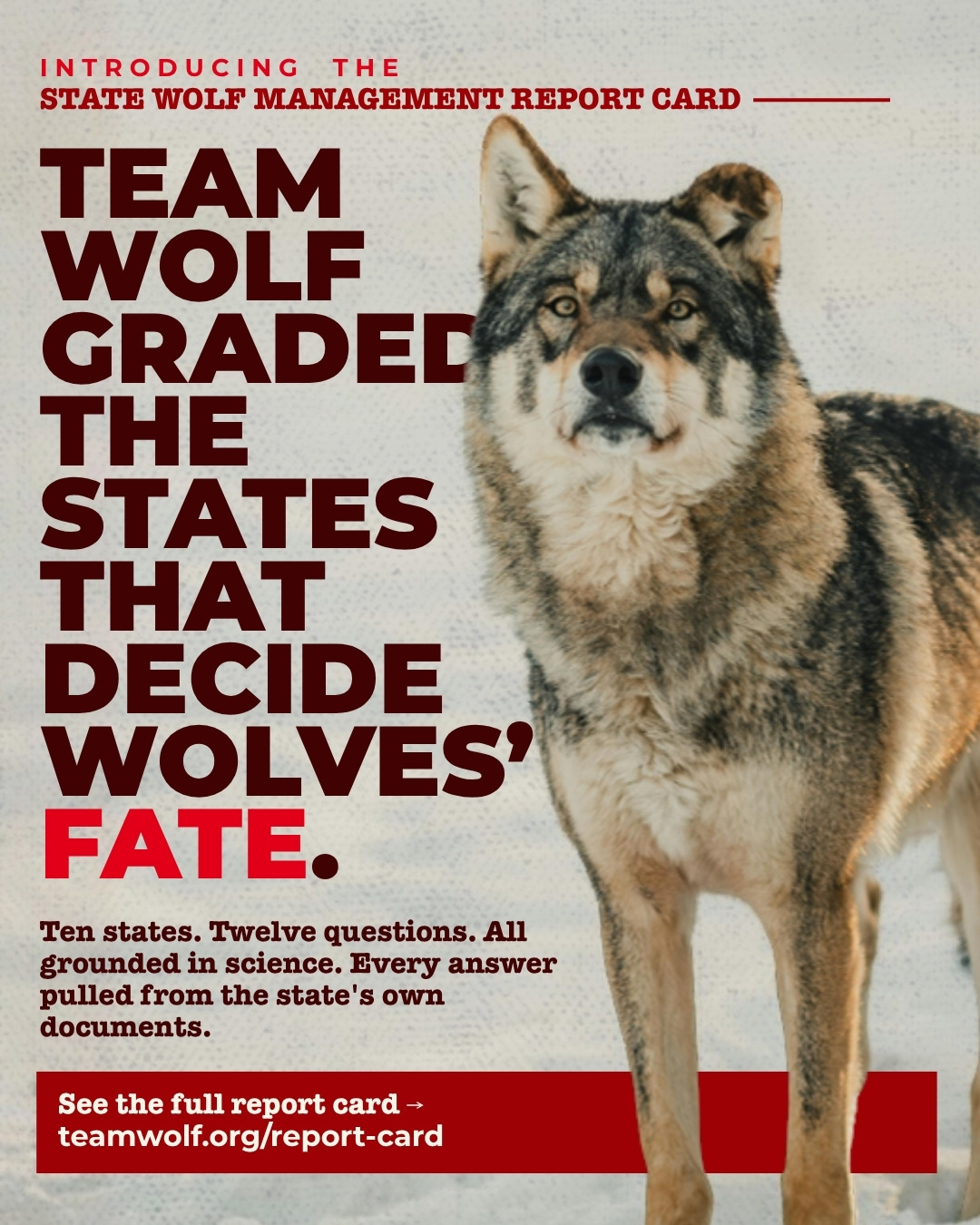
Wolf hero, no logo
Wolf hero, no logo
Download
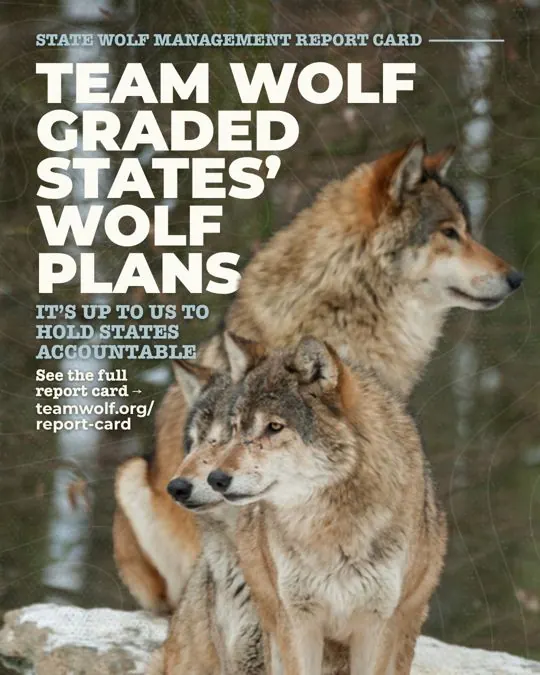
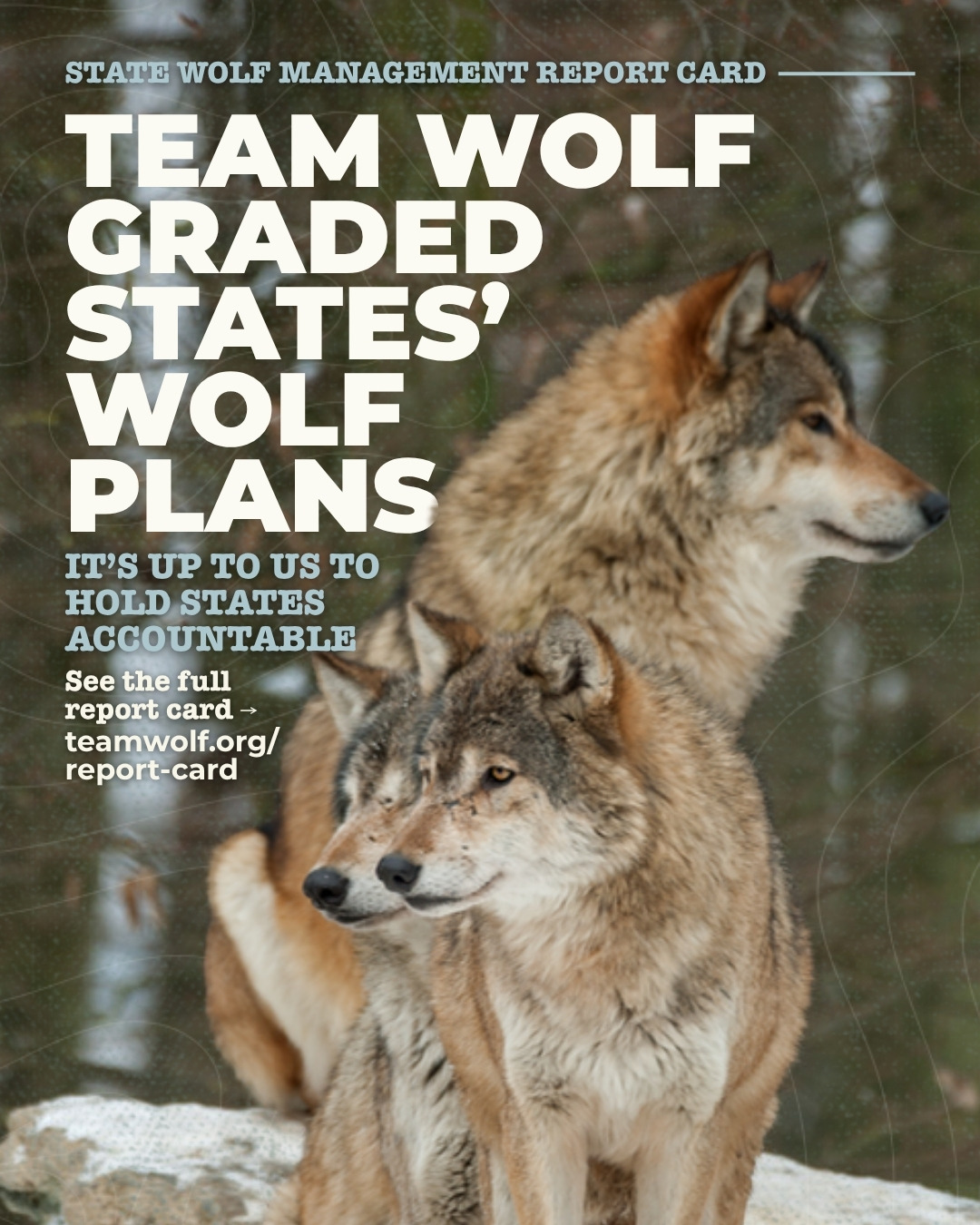
Wolf hero, alternate
Download
Suggested caption
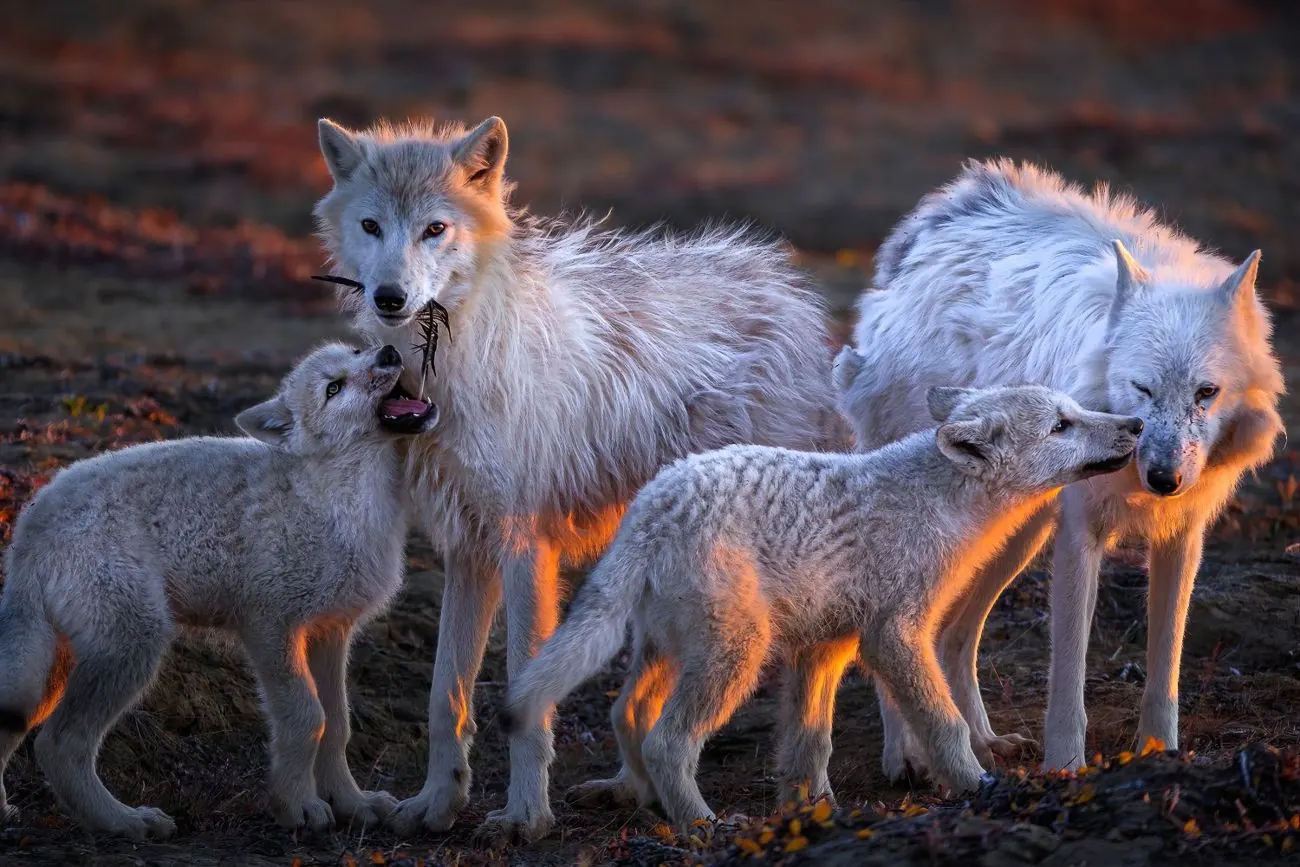
The wolf doesn't get a say in any of this. Ten states decide what happens to Gray Wolves. Three already do; the other seven are next in line if federal protection comes off. Team Wolf graded all ten on science, transparency and humane treatment—every answer from what the states published themselves. Not one earned an A. See where your state landed—link in bio.

Why it exists

“We” here is the whole network—you included.
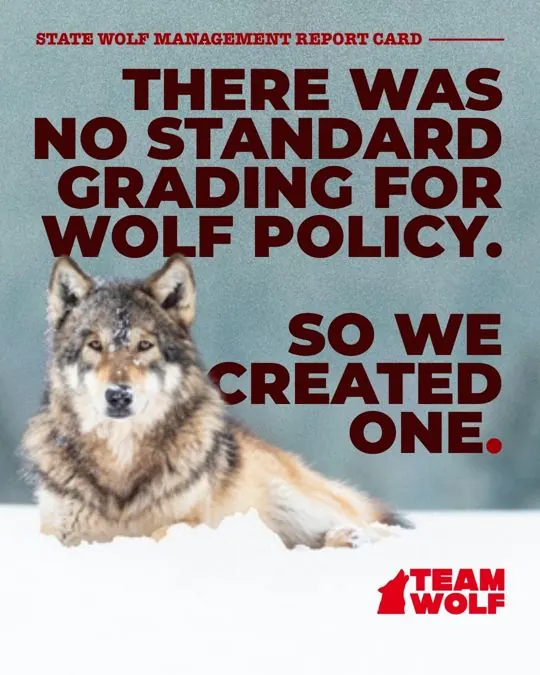
There was no standard. So we created one.
Download
Team Wolf made one
Team Wolf made one
Download
We read every state plan
Download
Team Wolf read every state plan
Download
Suggested caption
There was no standard for judging a state wolf plan. So we built one. Every state that holds Gray Wolves writes its own plan, sets its own goals and reports on itself. The State Wolf Management Report Card asks all ten the same twelve questions, scored against their own documents, on an absolute scale rather than a curve. Ten states graded. Not one earned an A. We are proud to stand behind it. Link in bio.

Your state

One card per graded state. Post the one your audience lives in.
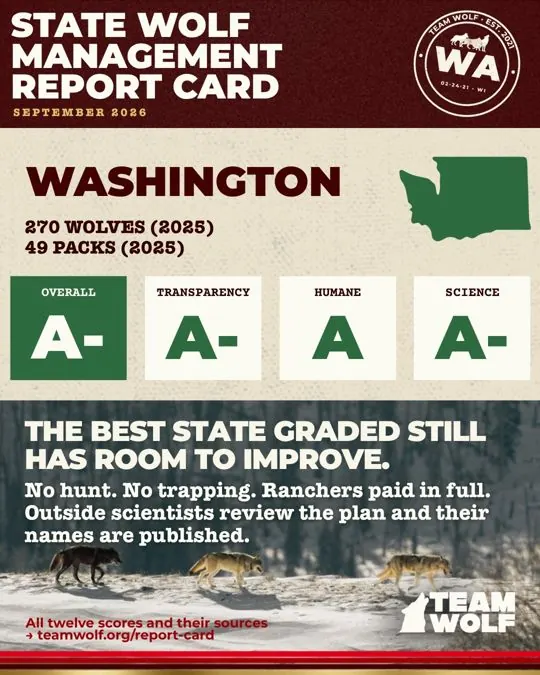
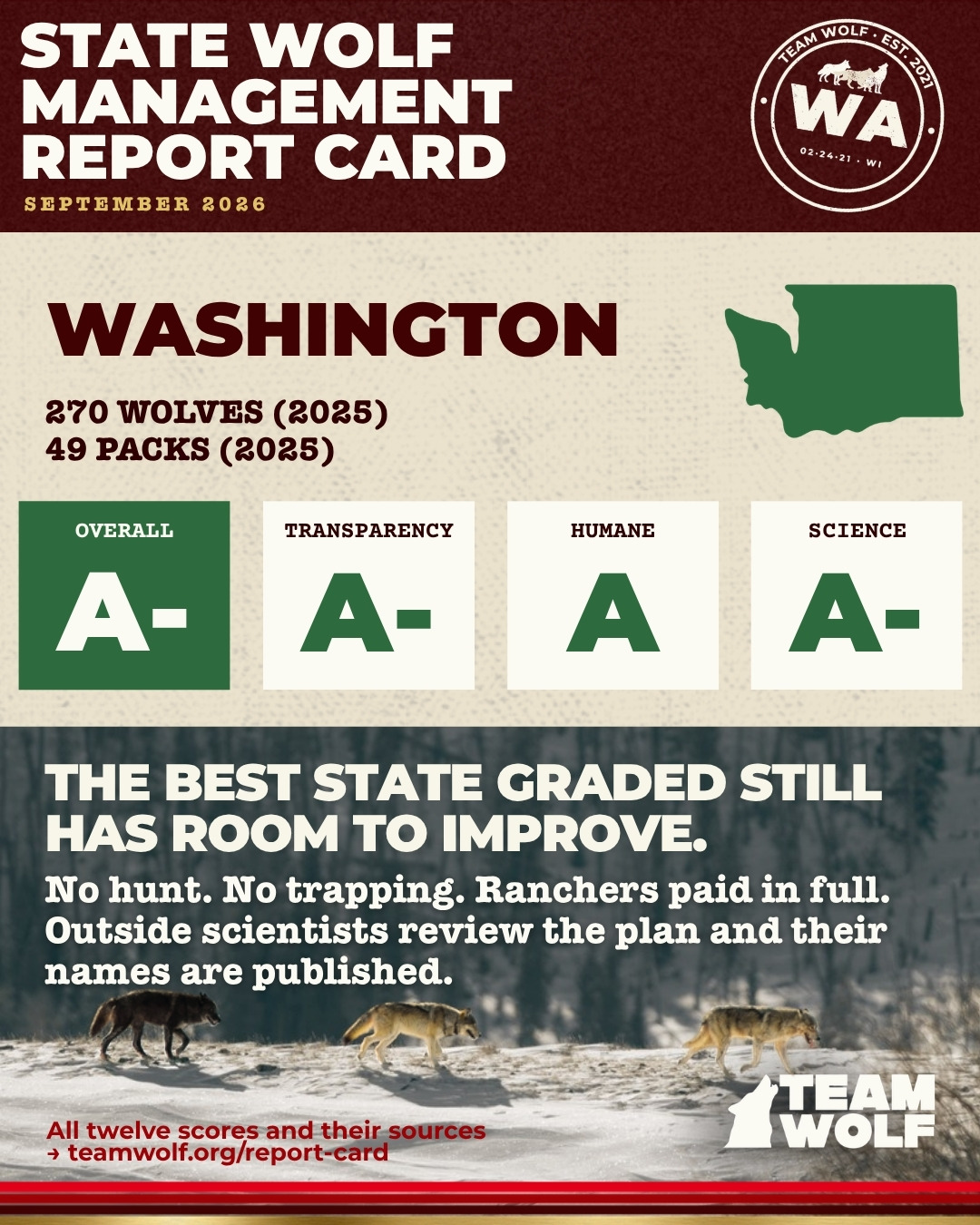
Washington
Washington
Download
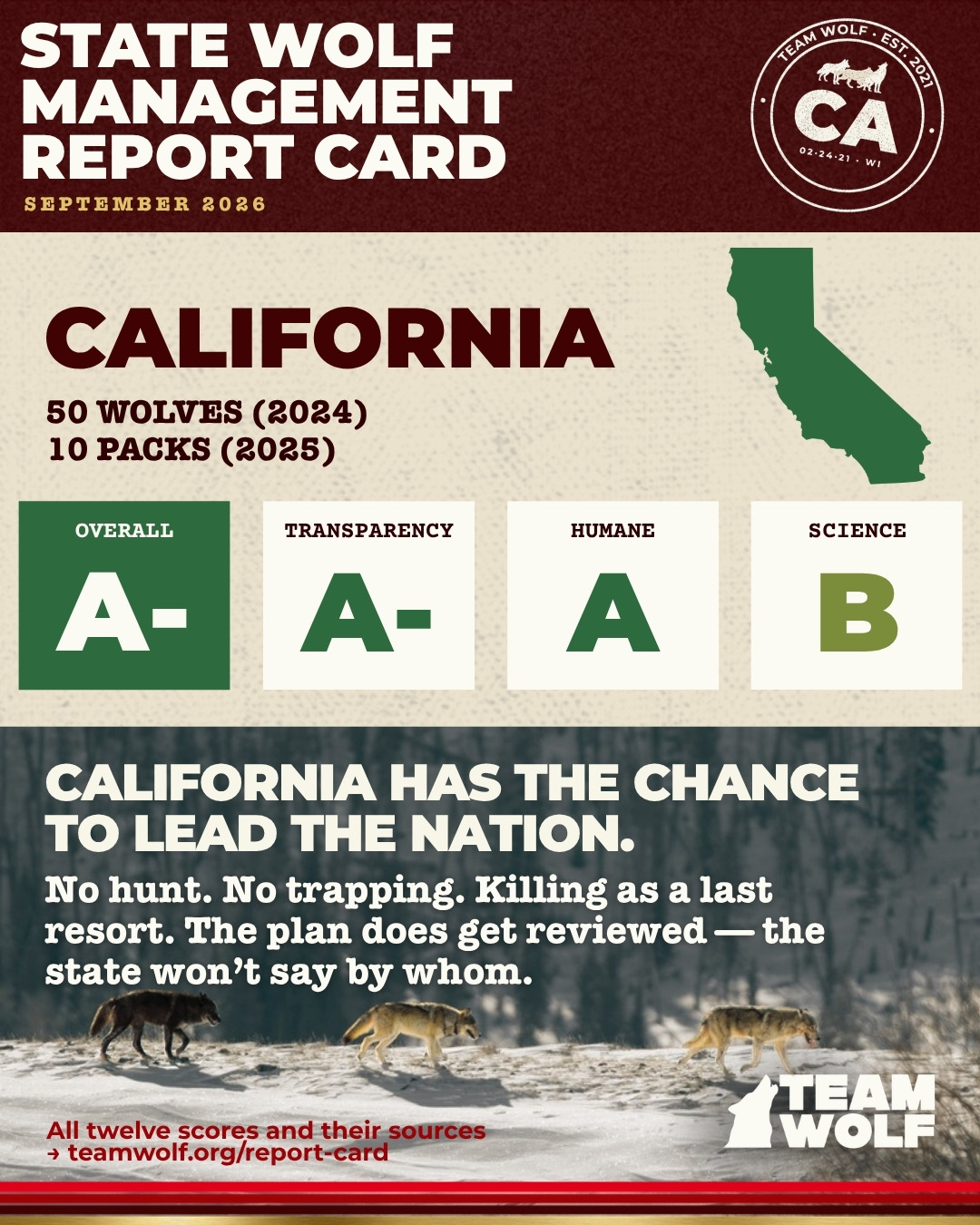
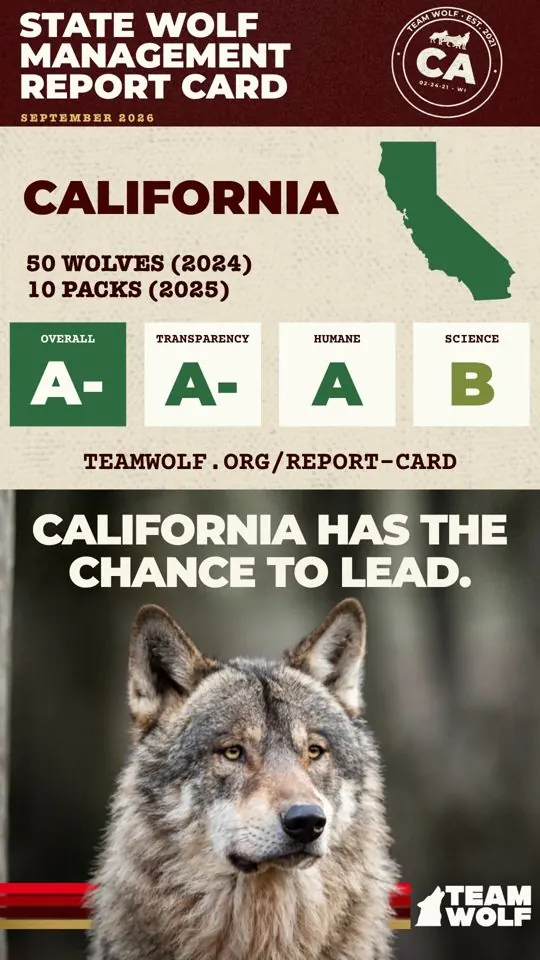
California
California
Download
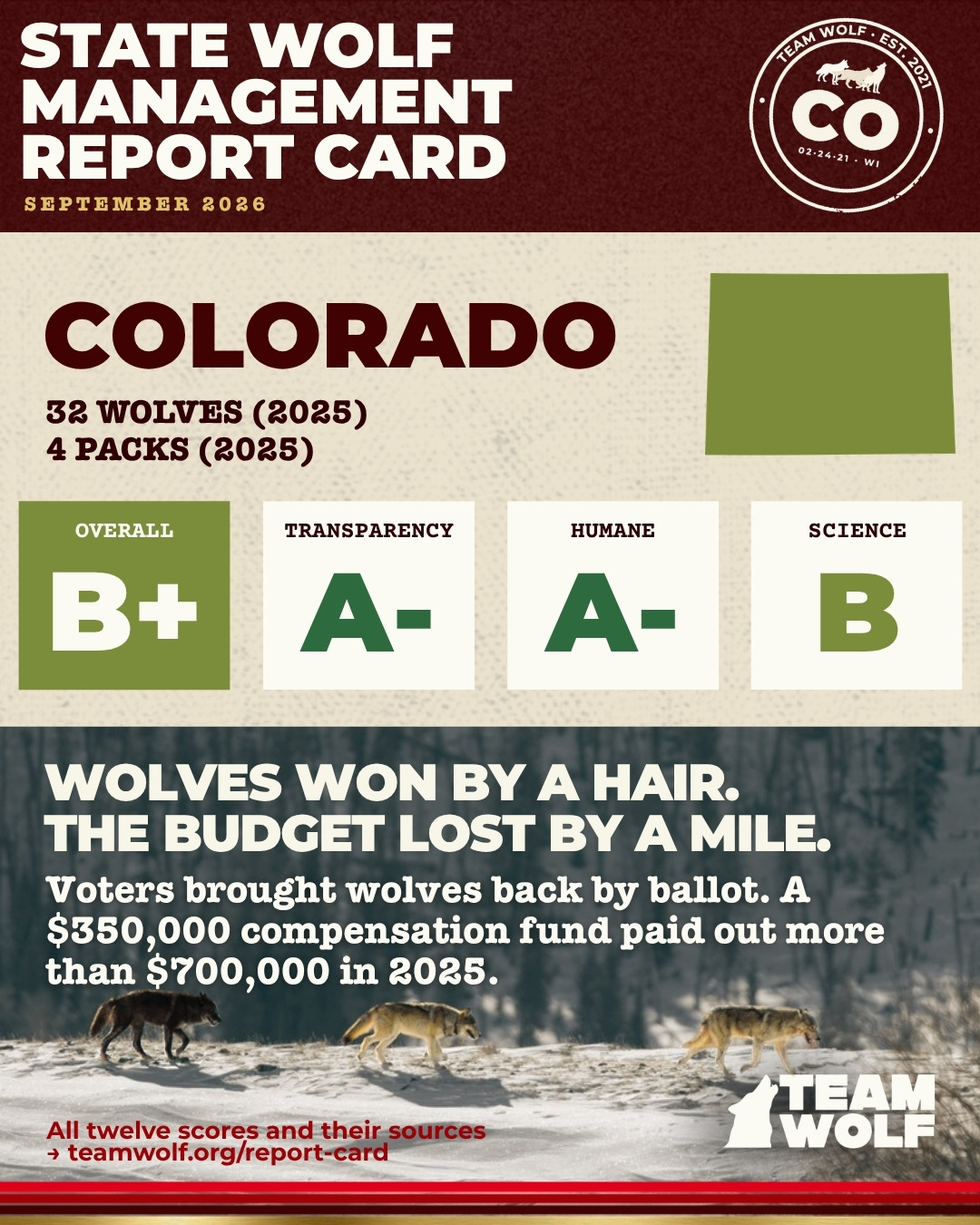
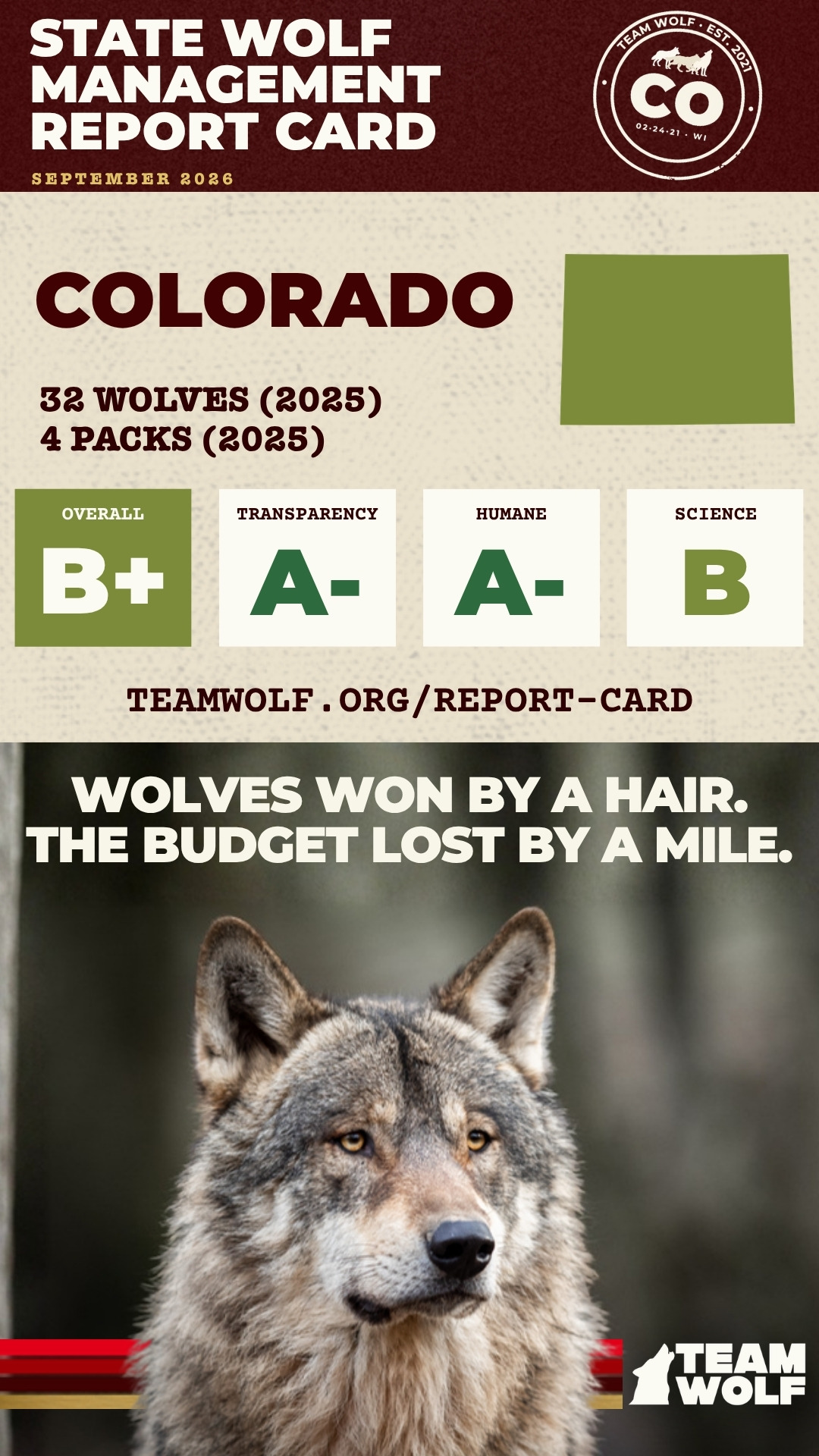
Colorado
Colorado
Download
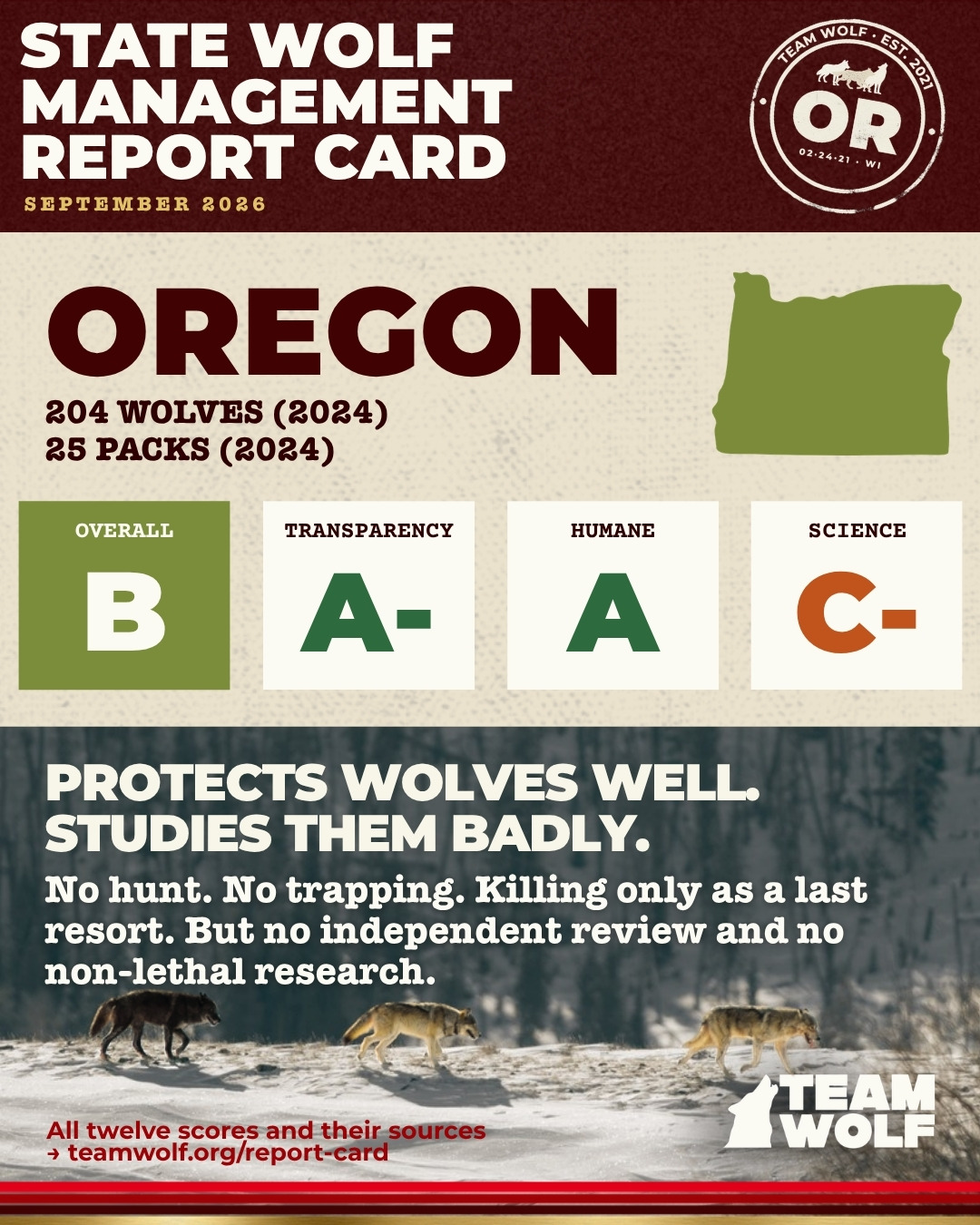
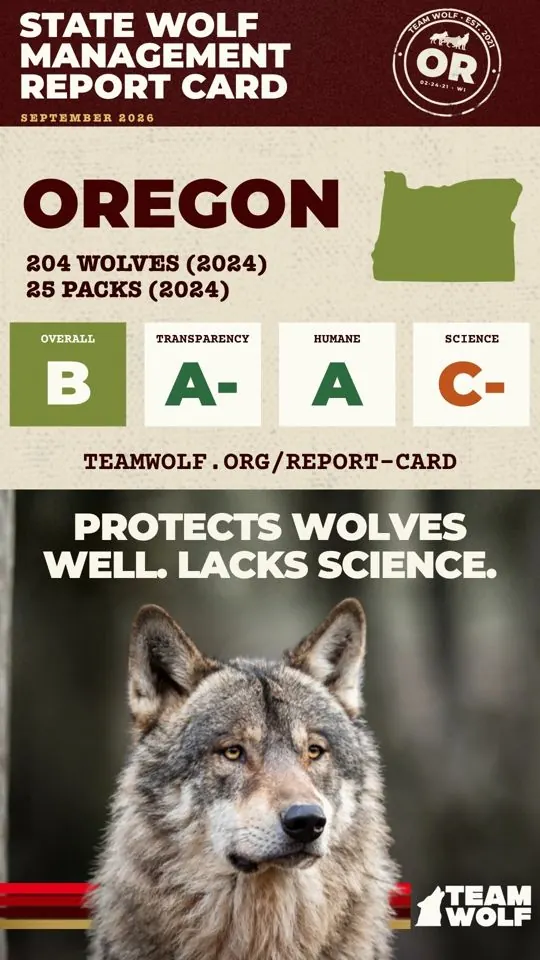
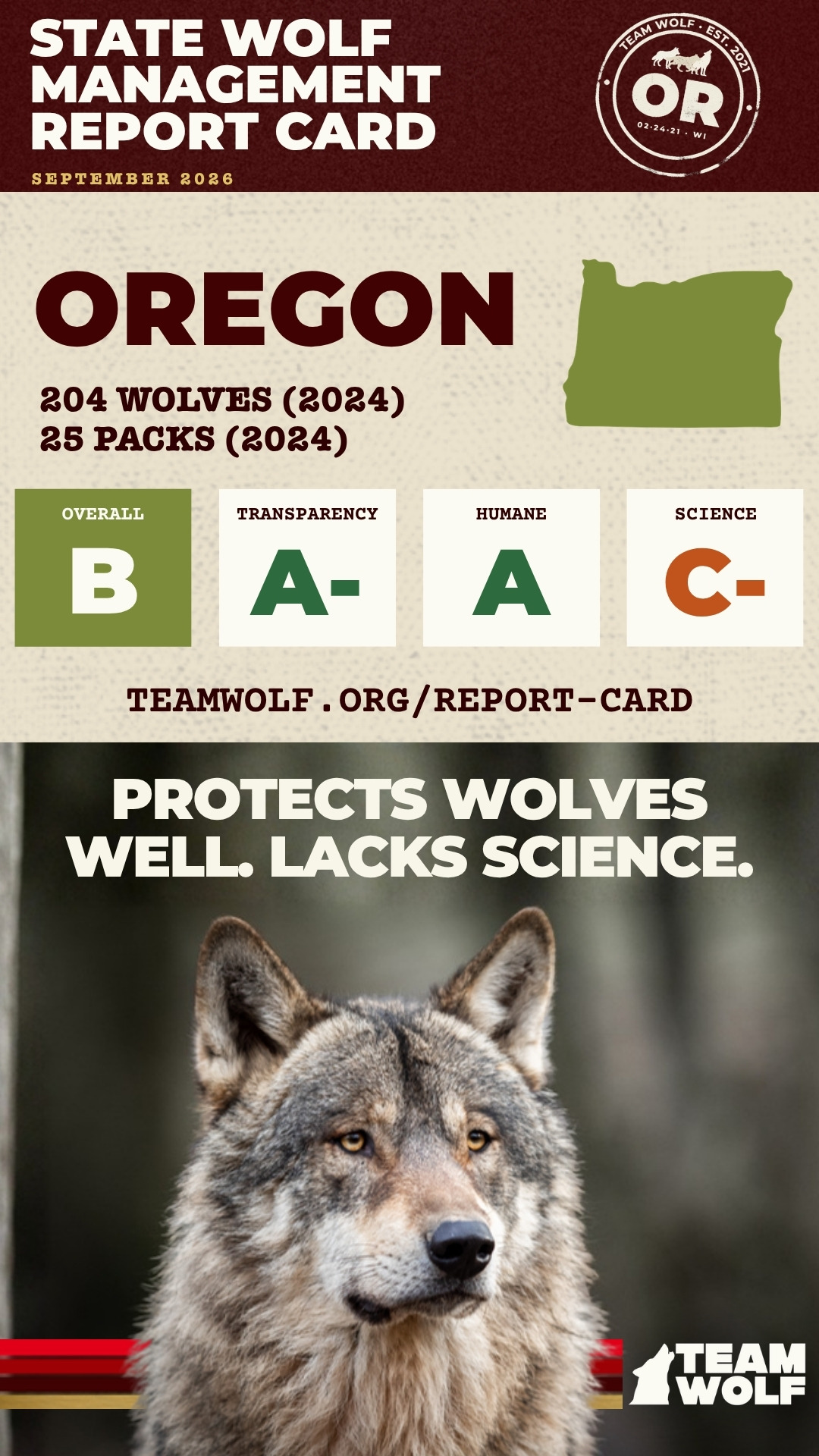
Oregon
Oregon
Download
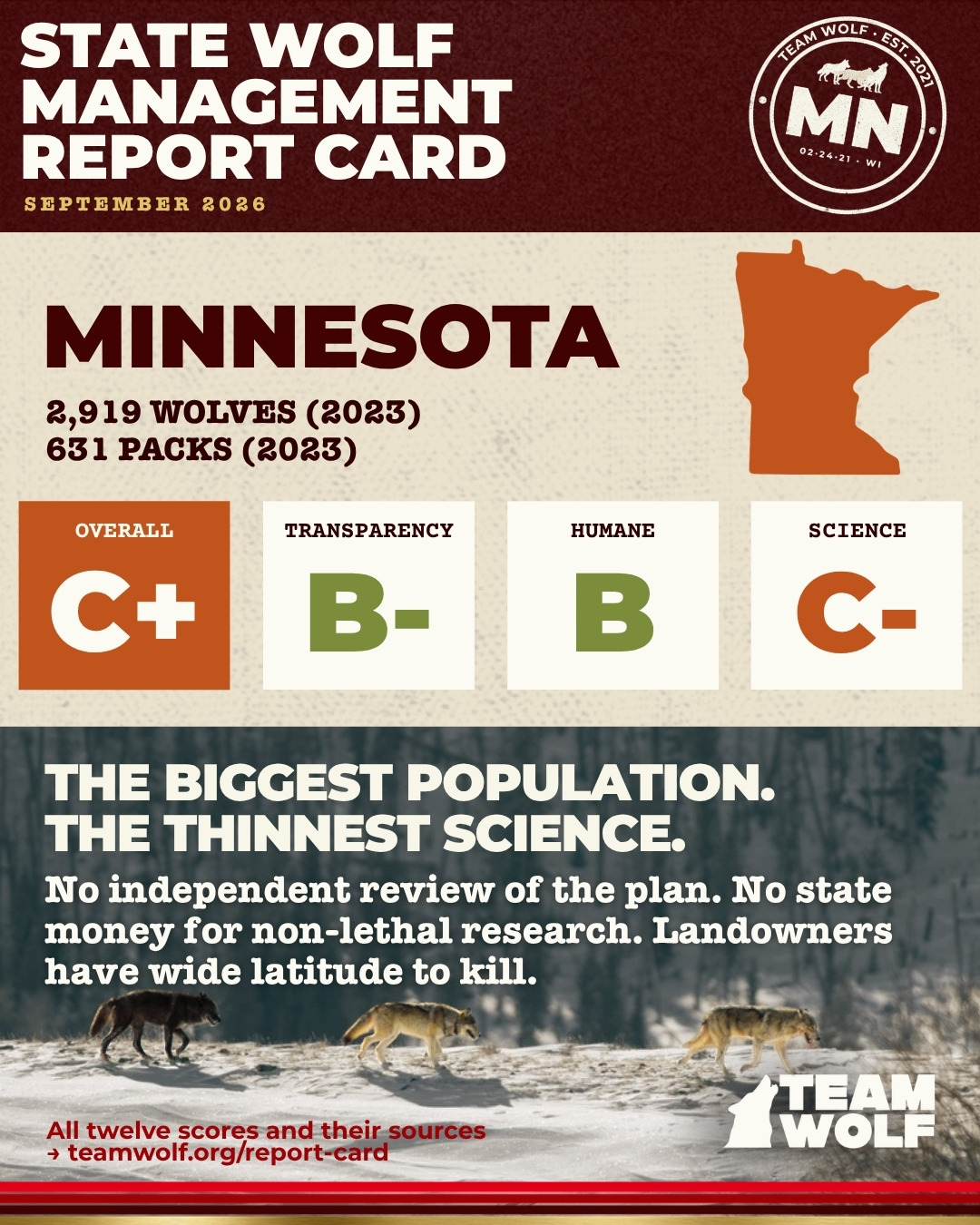
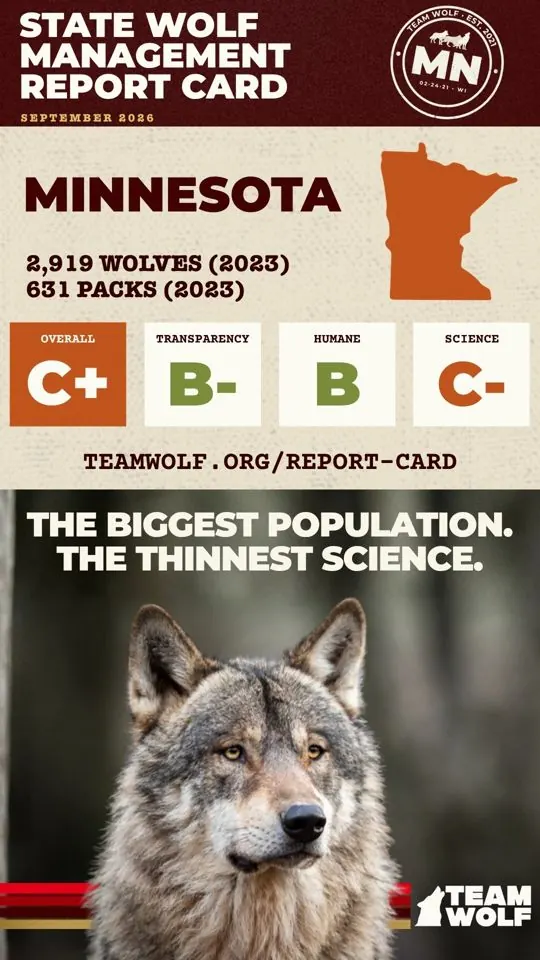
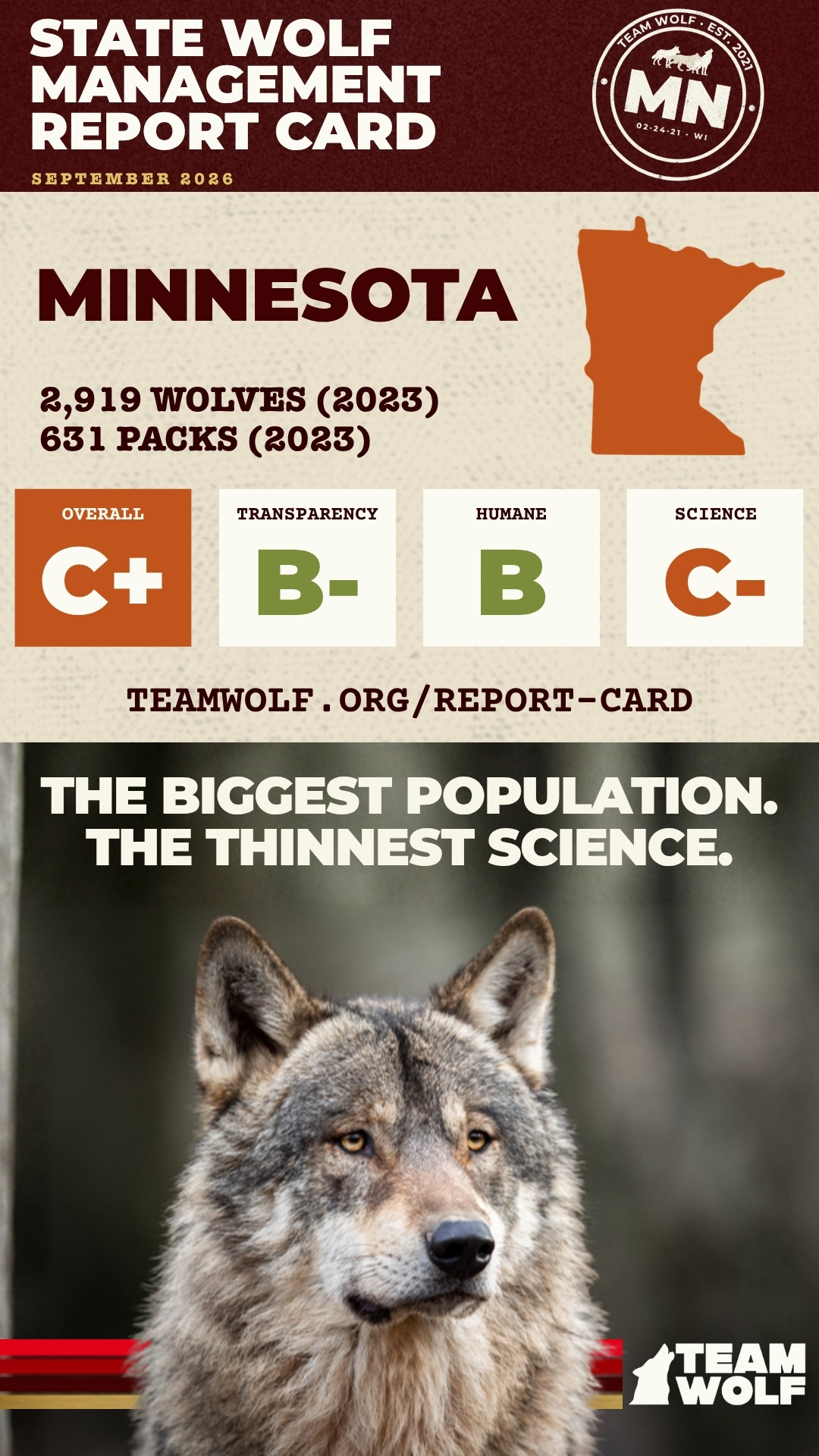
Minnesota
Minnesota
Download
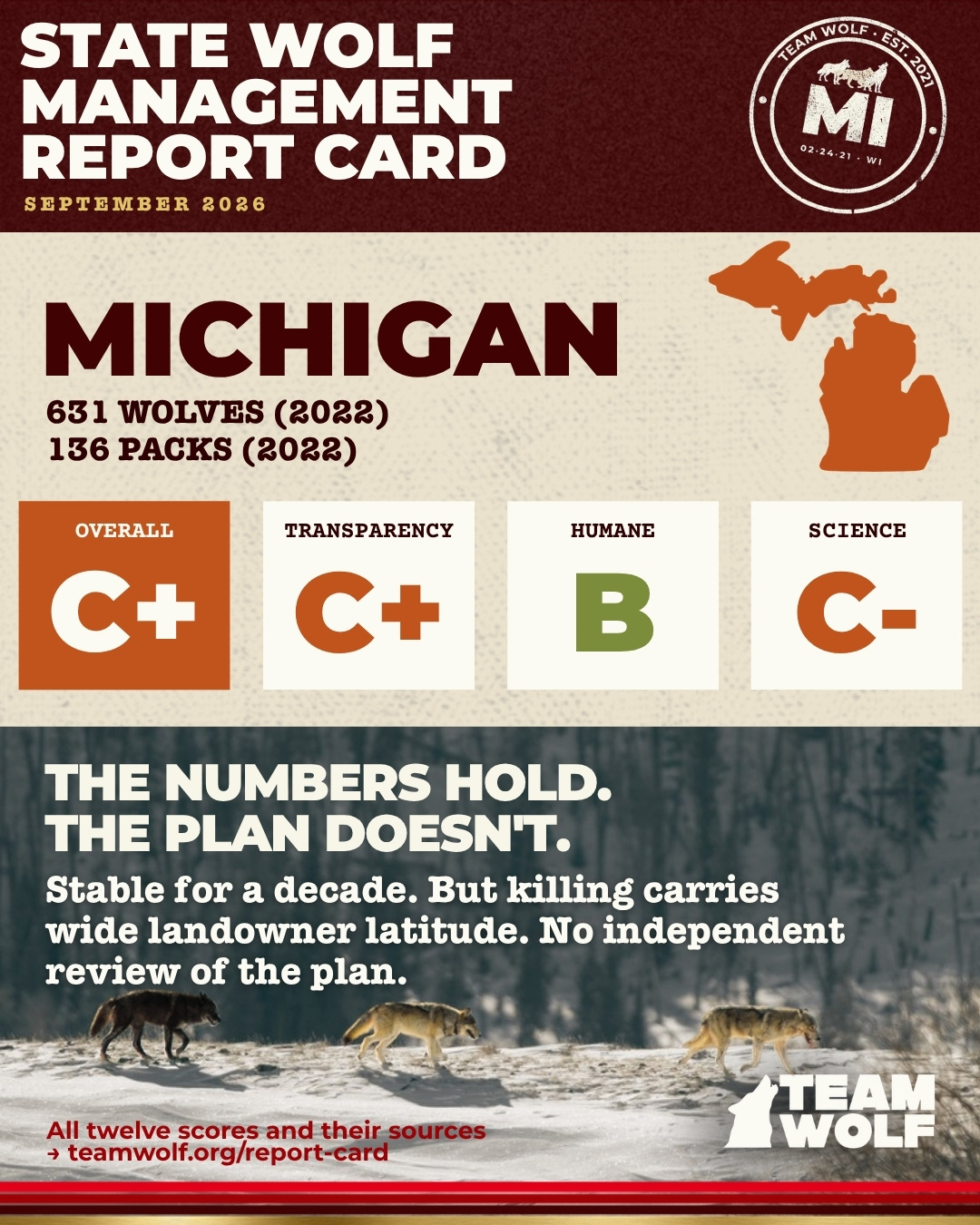
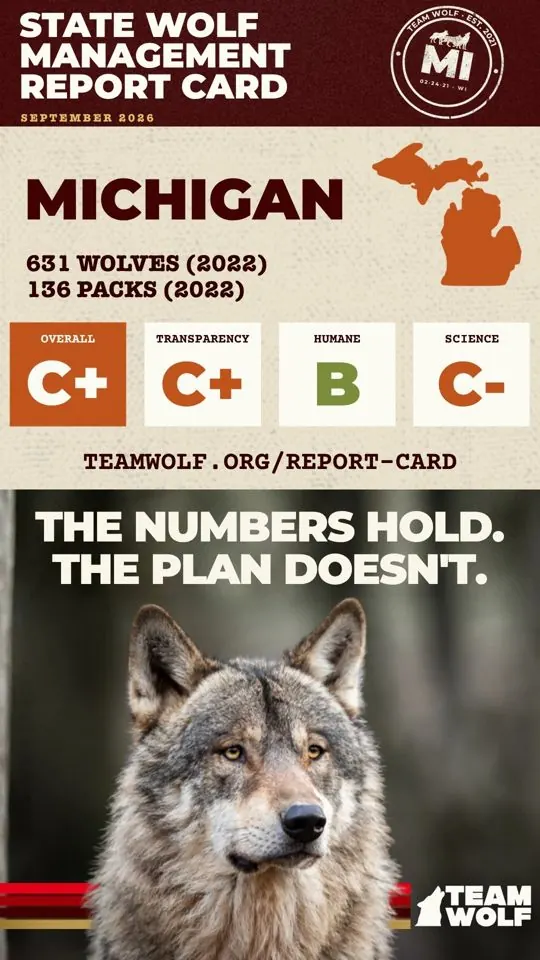
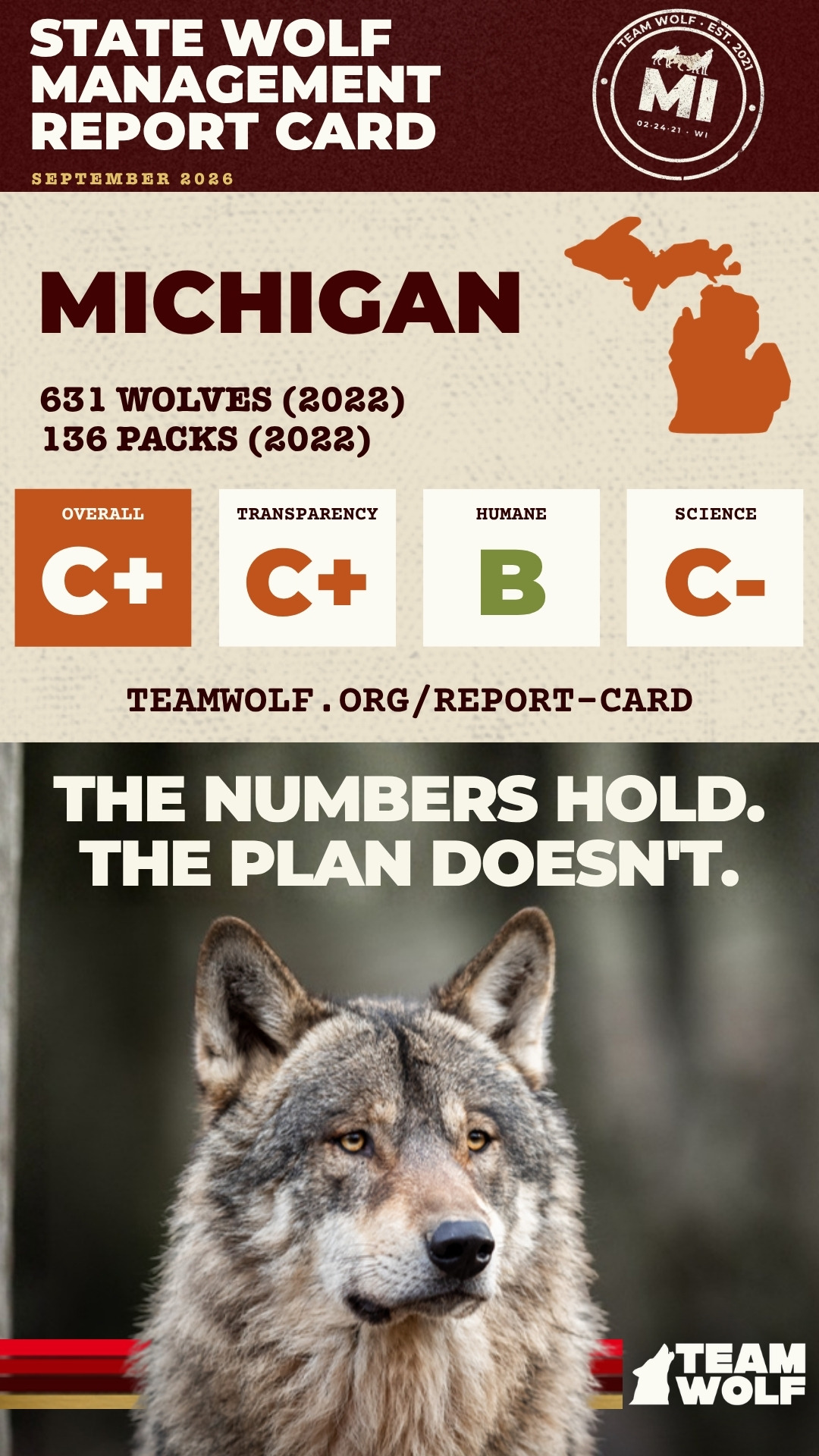
Michigan
Michigan
Download
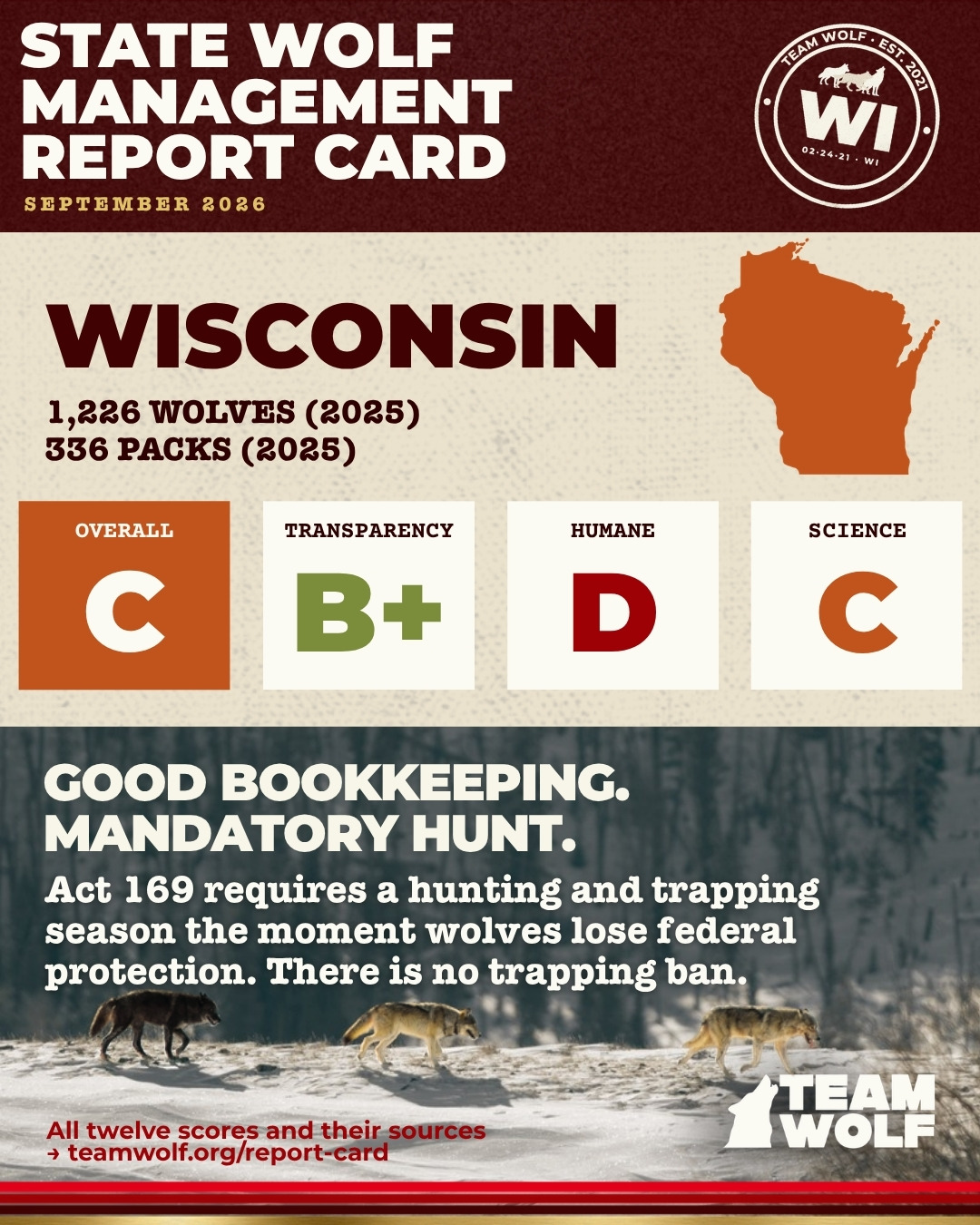
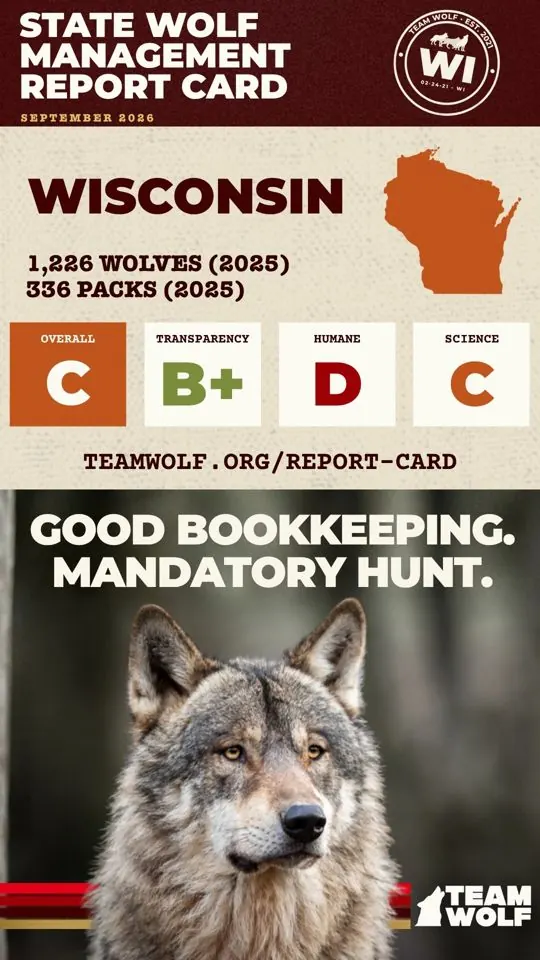
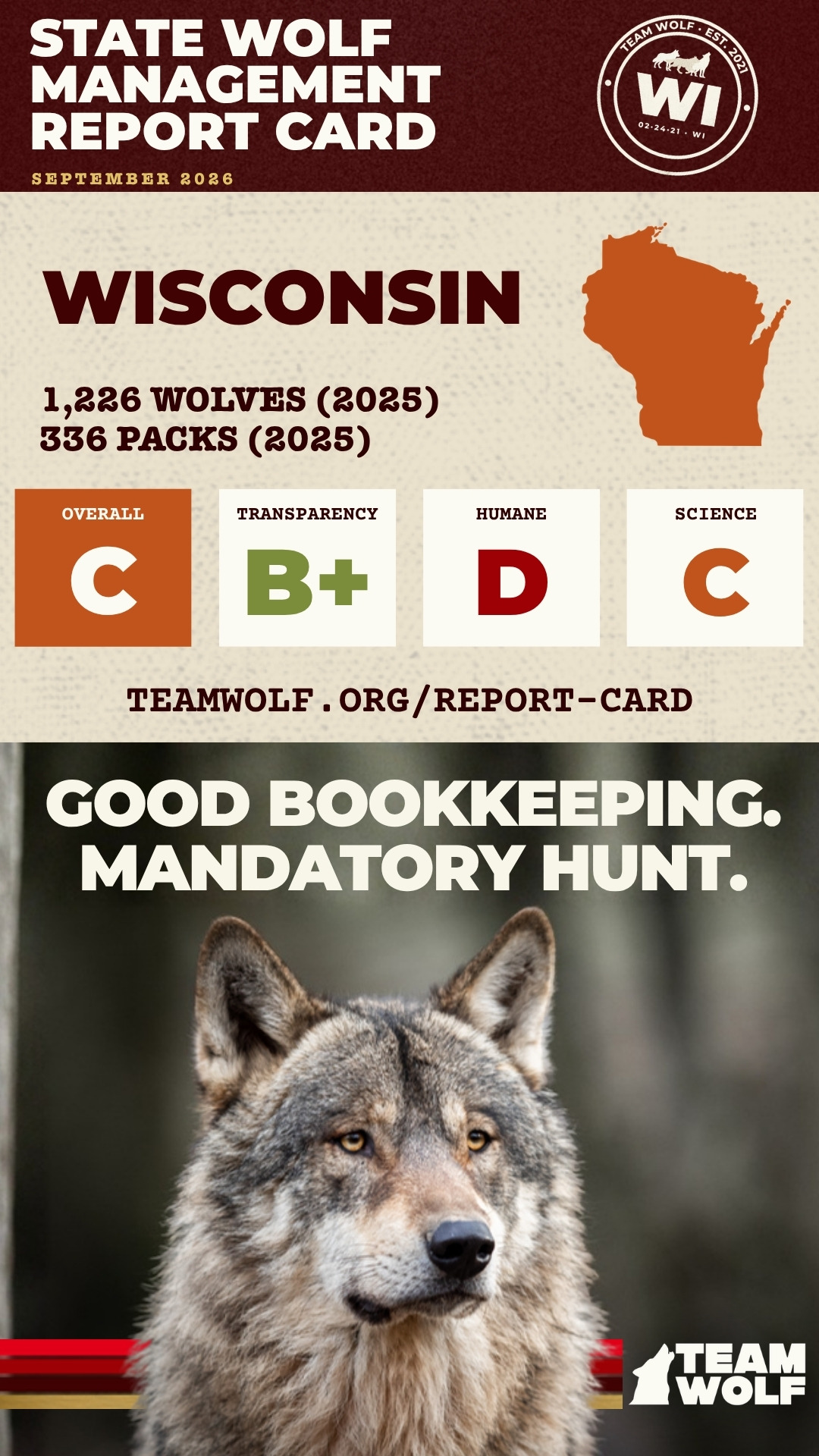
Wisconsin
Wisconsin
Download
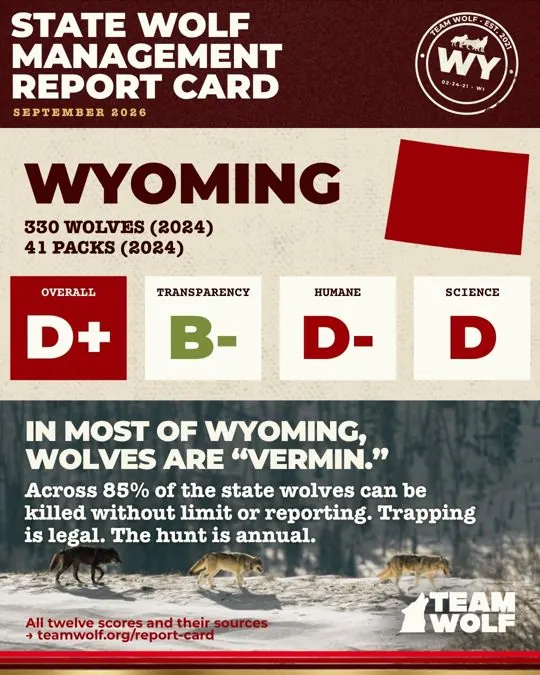
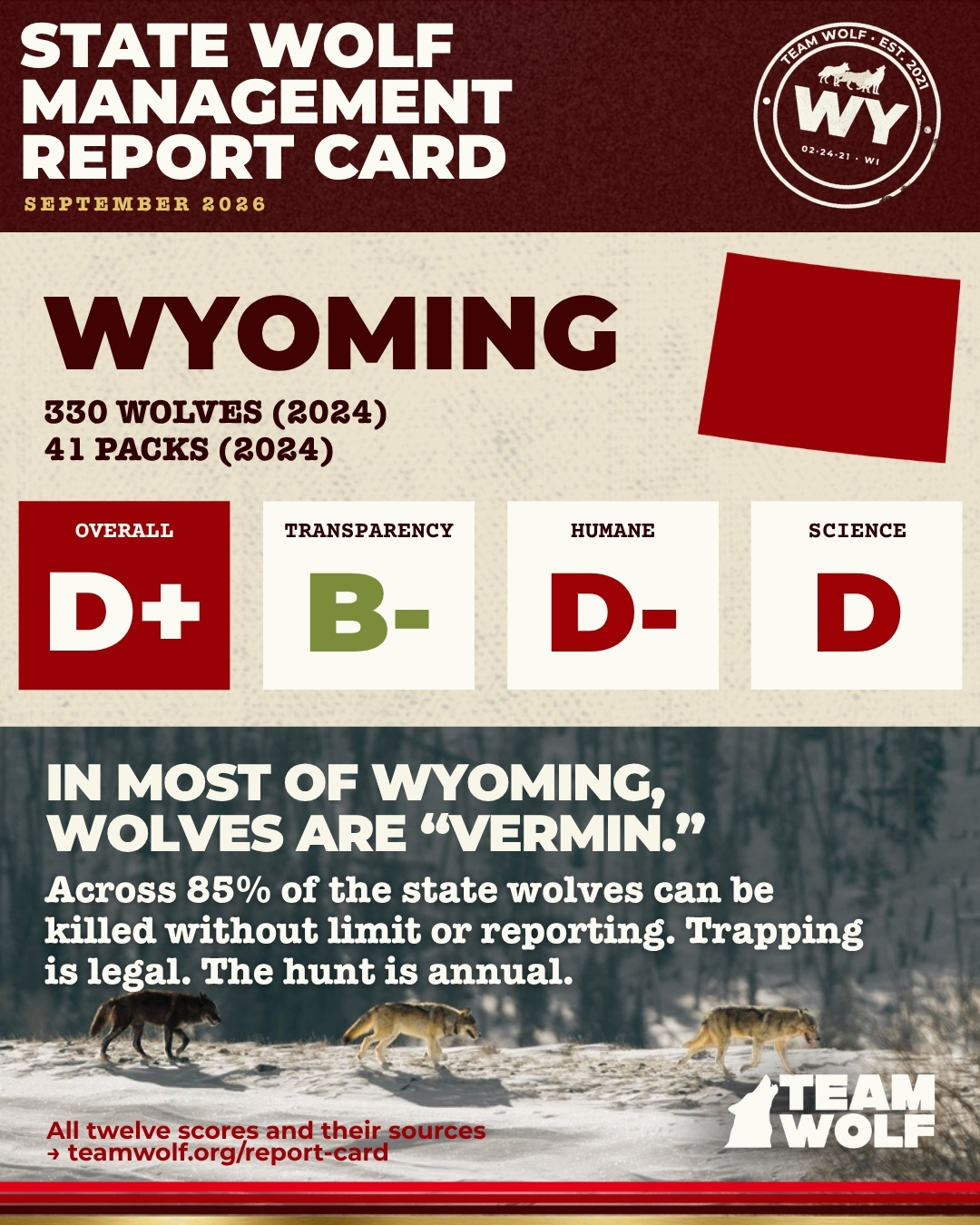
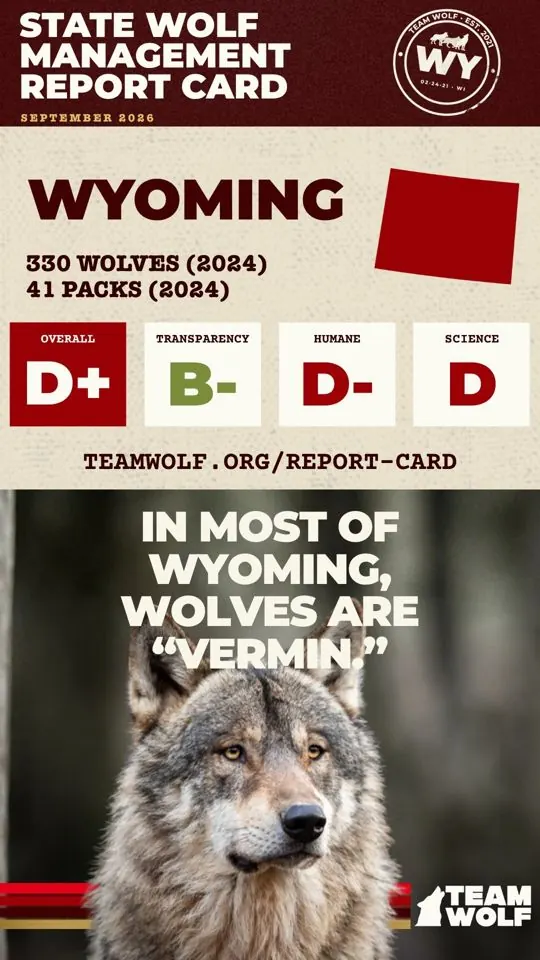
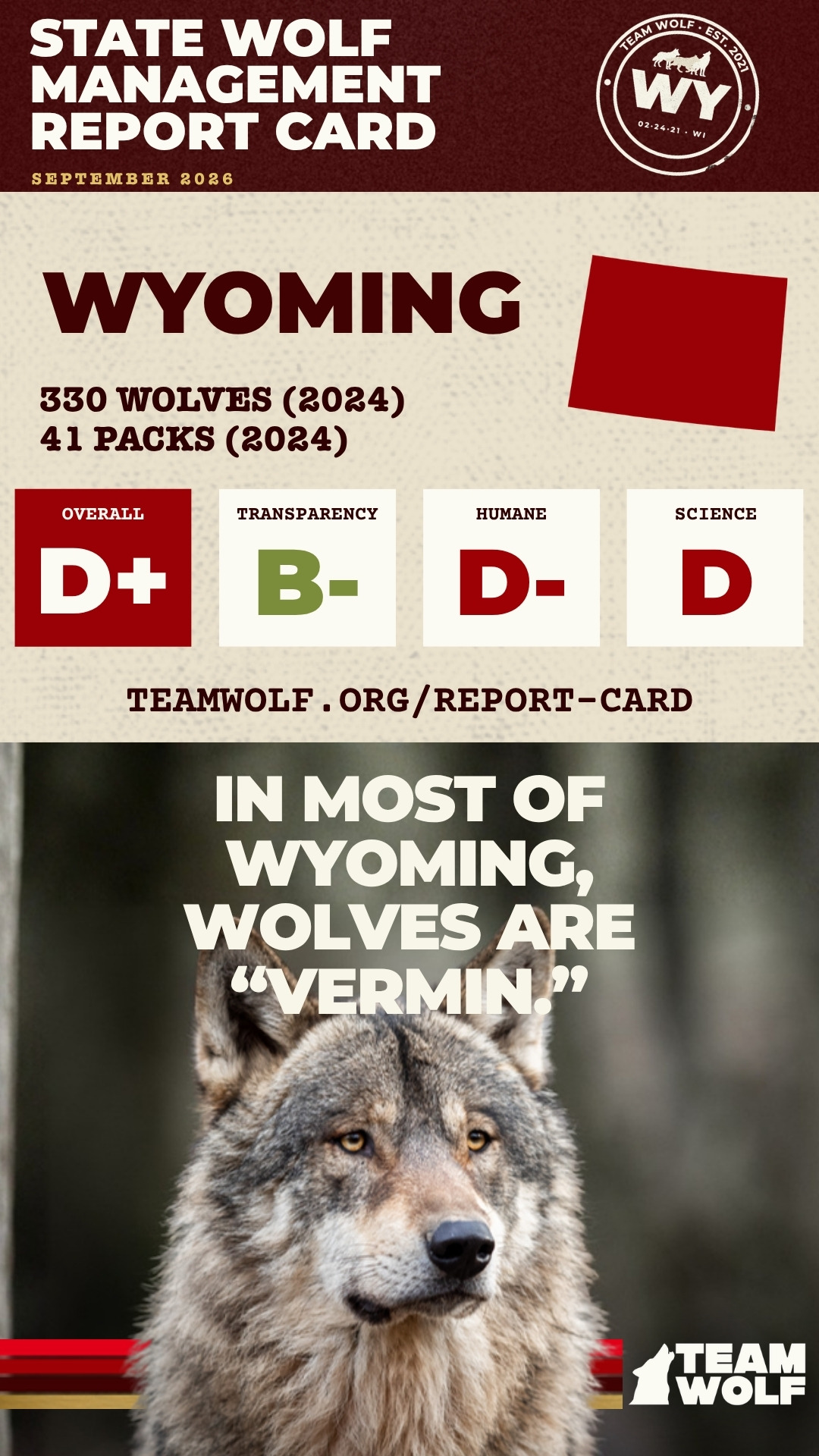
Wyoming
Wyoming
Download
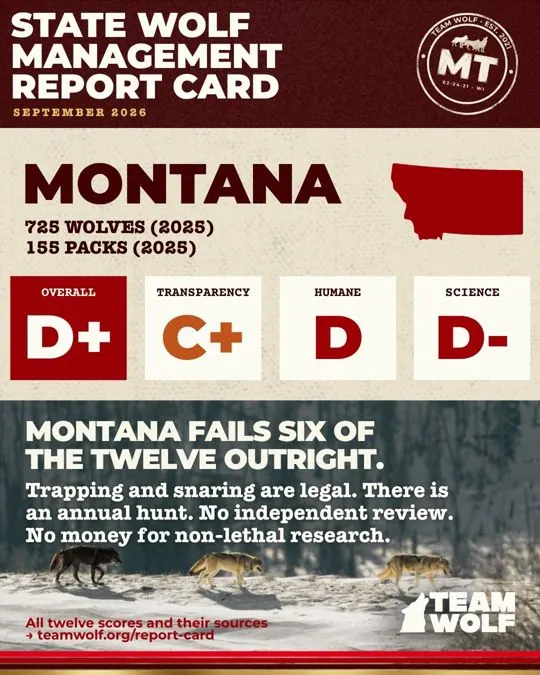
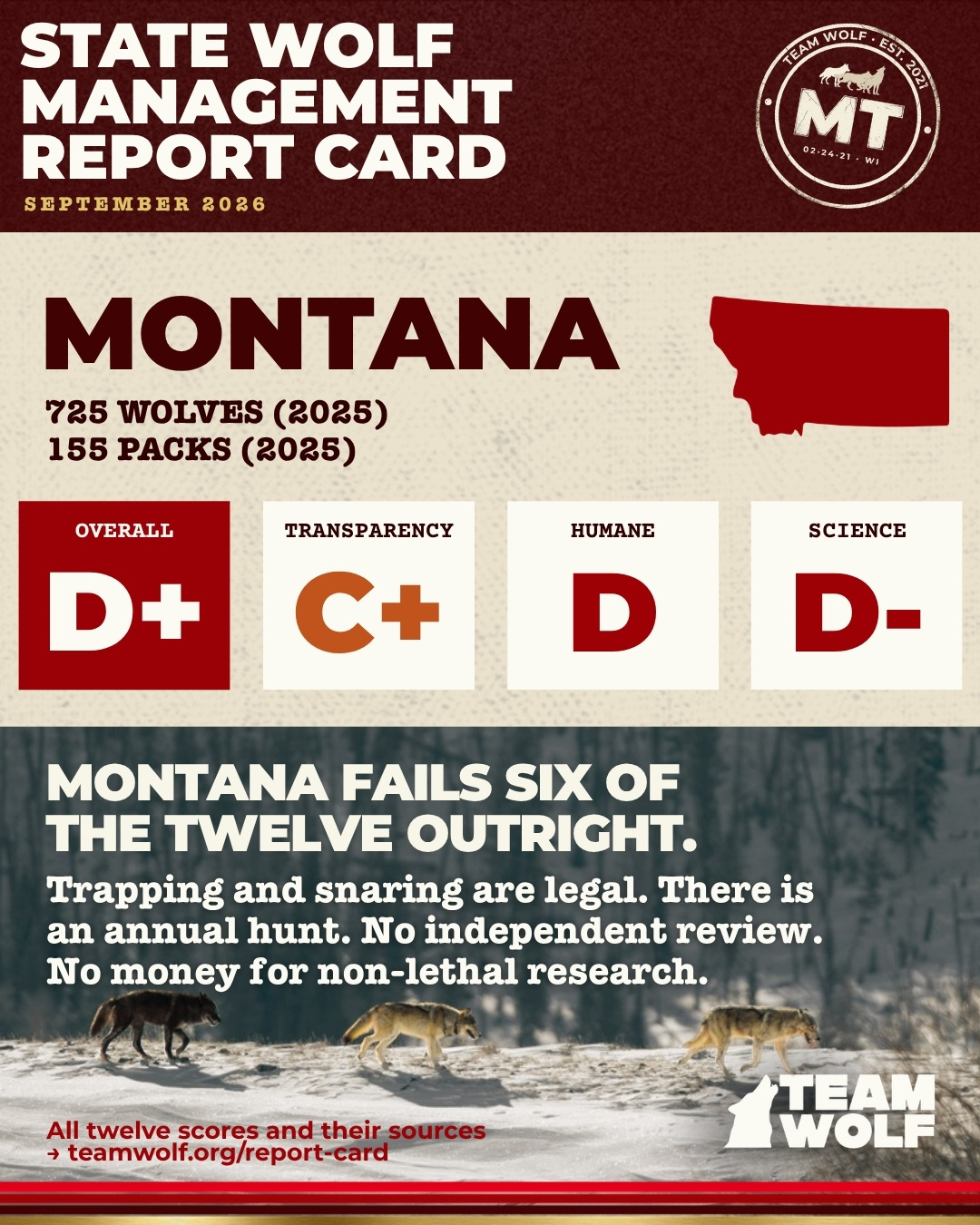
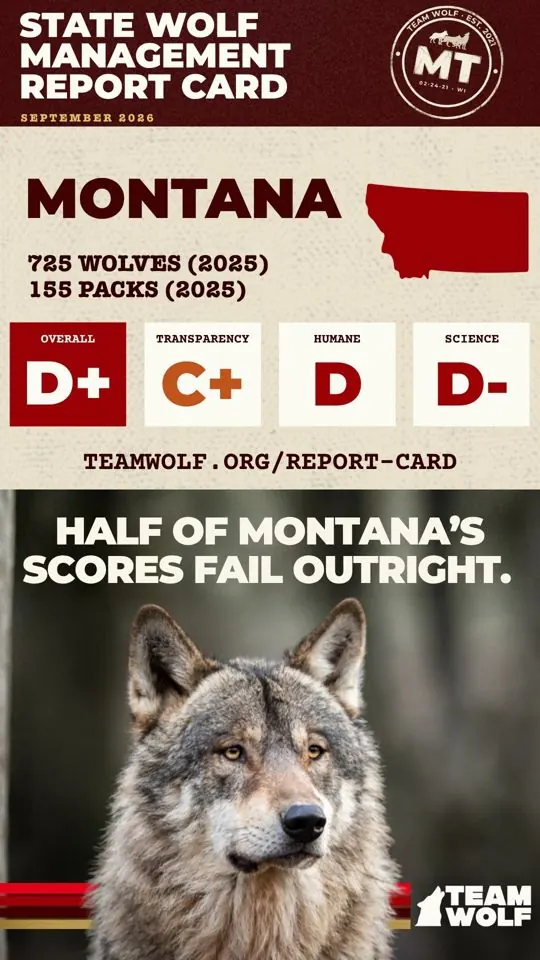
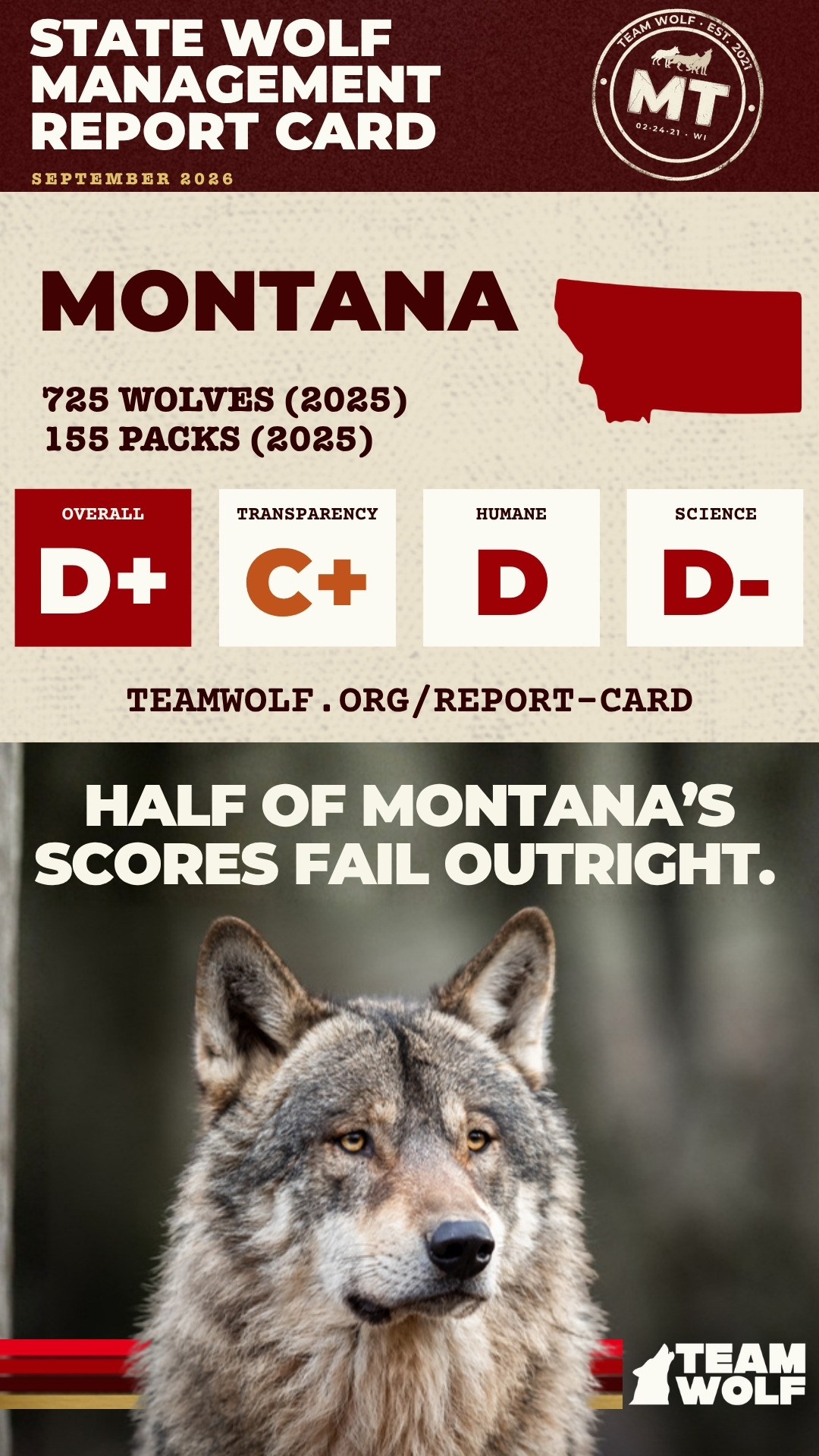
Montana
Montana
Download
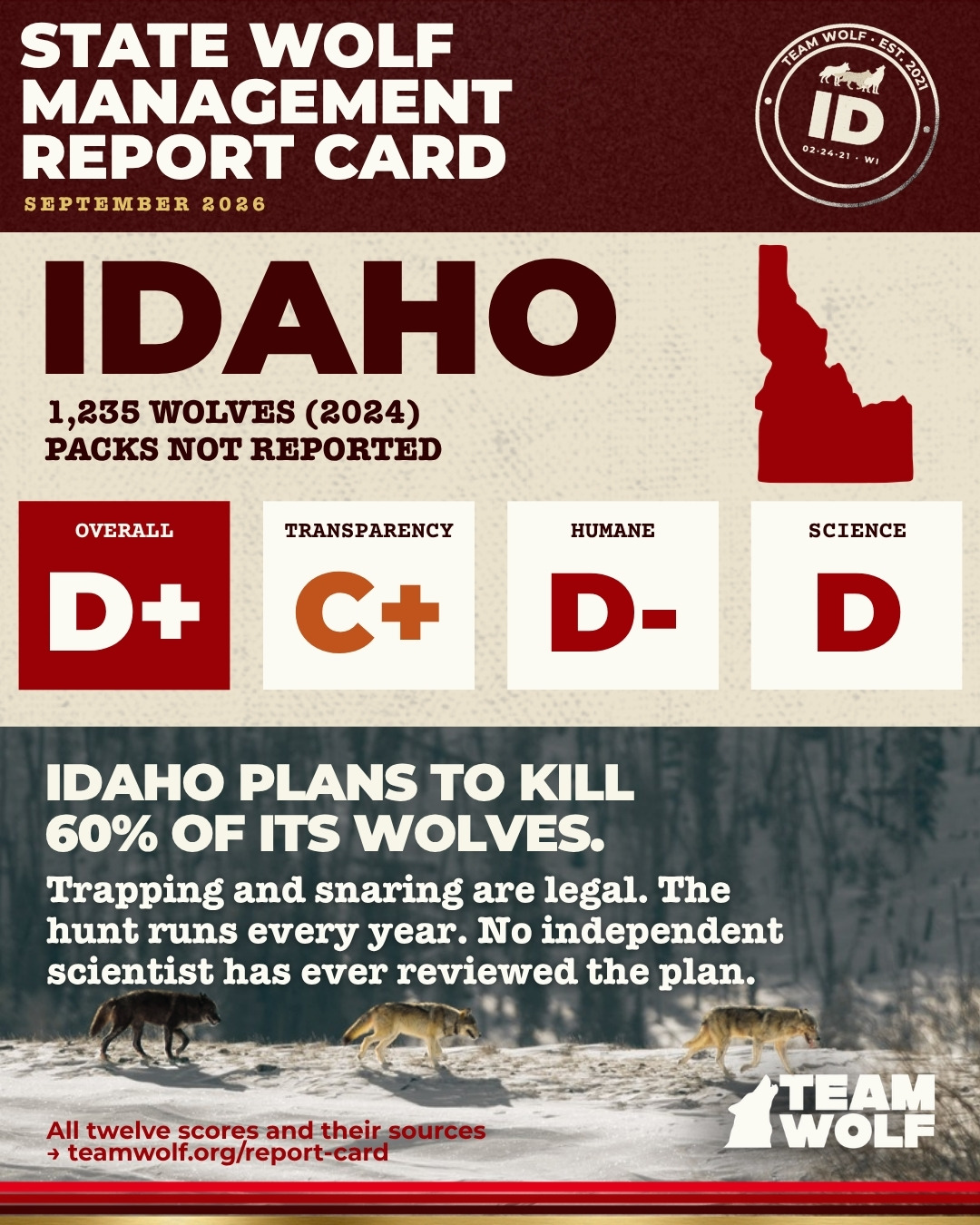
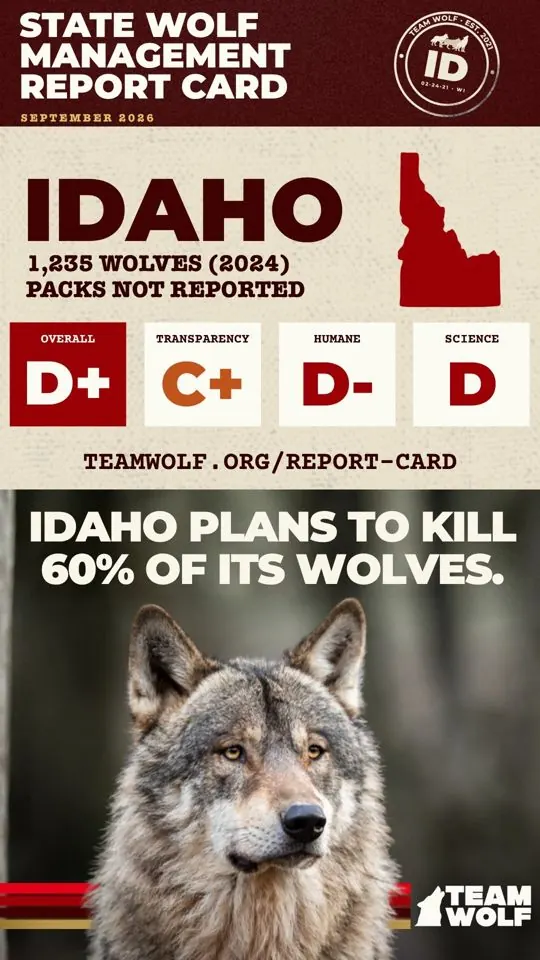
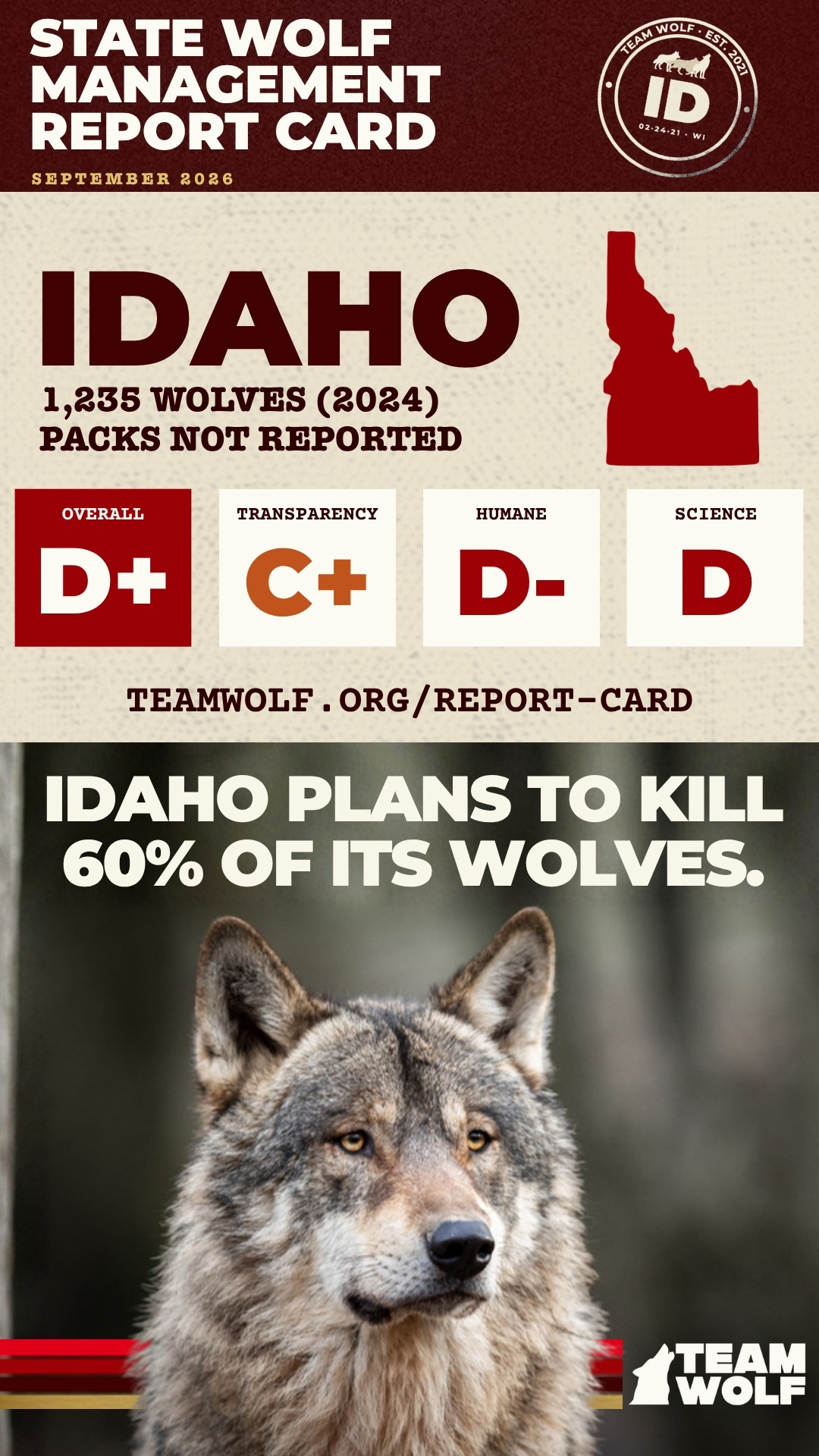
Idaho
Idaho
Download
Suggested caption
[STATE]'s wolf plan just got a grade. Team Wolf's State Wolf Management Report Card asks every state that holds Gray Wolves the same twelve questions—four on science, four on transparency, four on how humanely it treats wildlife—and scores each answer against that state's own published documents. Here is how [STATE] did. Tag your wildlife agency and your governor; handles are in the toolkit. Link in bio.

Stories

Nine-by-sixteen, for Instagram and Facebook stories.
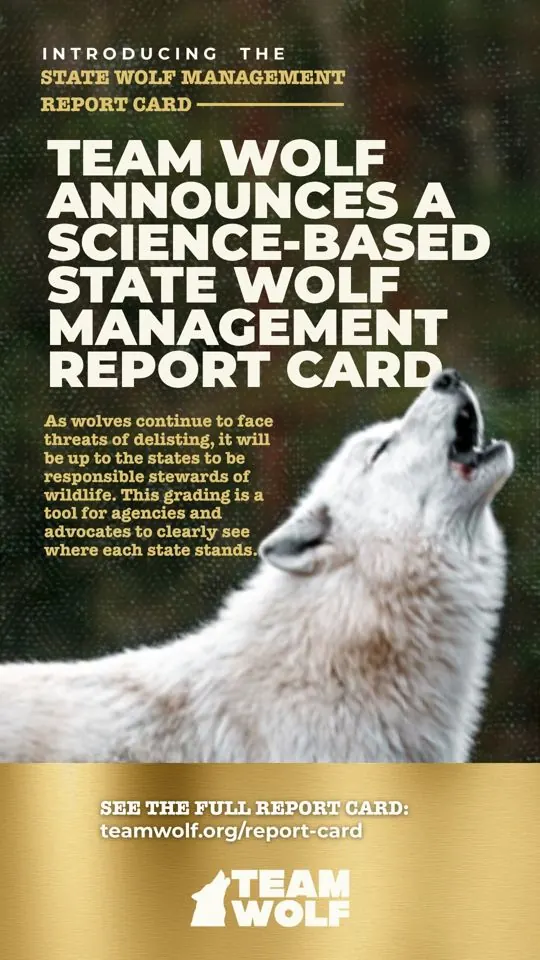
The announcement
The announcement
Download
The map
The map
Download
Every grade
Every grade
Download
Every grade, no logo
Download
Washington
Washington
Download
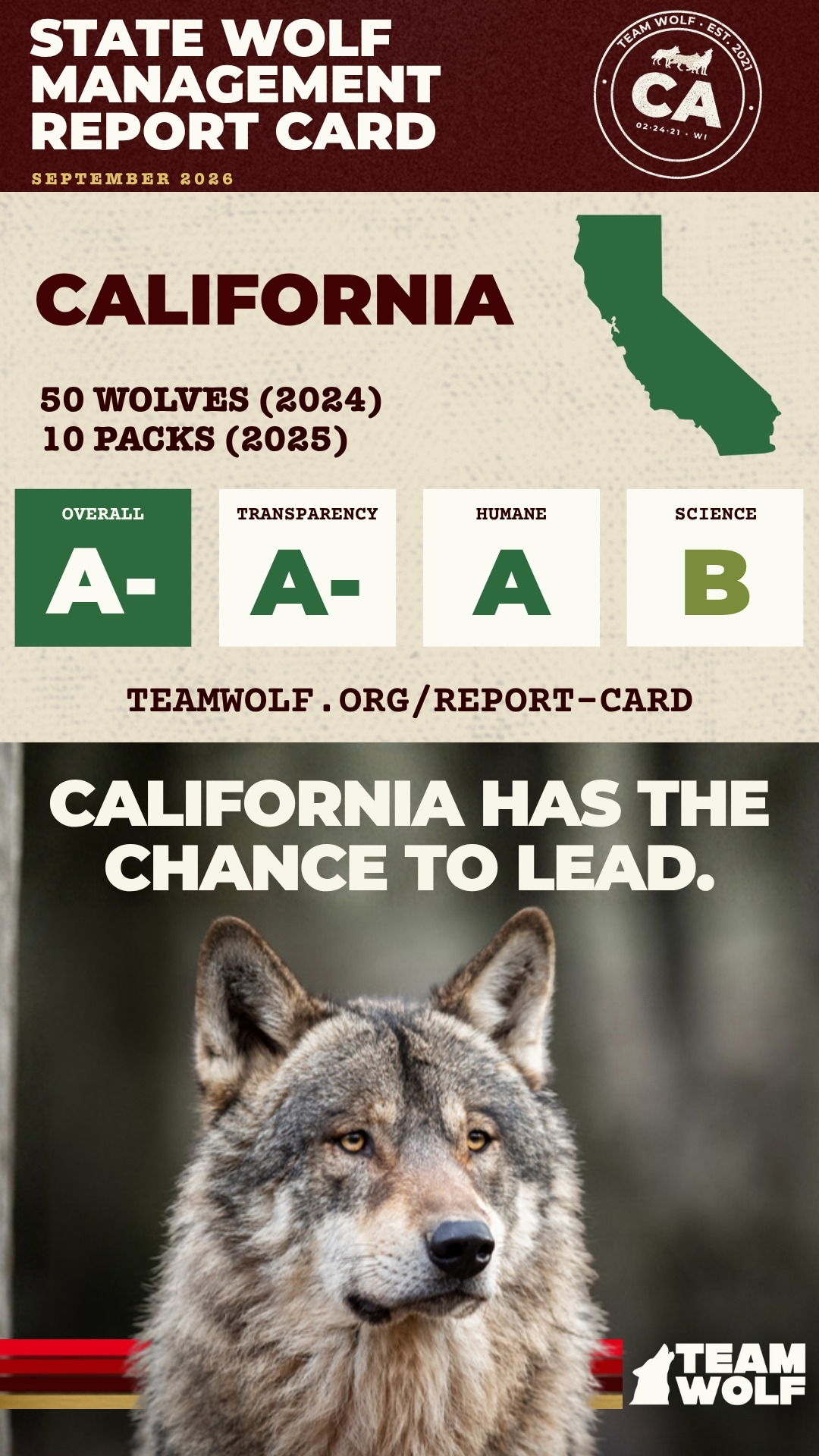
California
California
Download
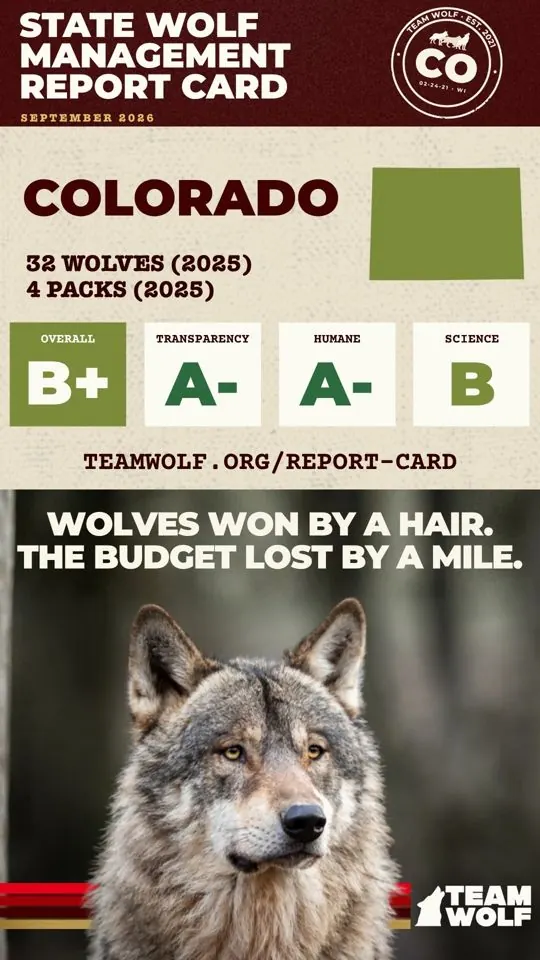
Colorado
Colorado
Download
Oregon
Oregon
Download
Minnesota
Minnesota
Download
Michigan
Michigan
Download
Wisconsin
Wisconsin
Download
Wyoming
Wyoming
Download
Montana
Montana
Download
Idaho
Idaho
Download
Suggested caption
Nine-by-sixteen versions of the same set, sized for stories. Add a link sticker to teamwolf.org/report-card so people can go straight to the grades, and tag your state's wildlife agency and governor in the frame.
Endorse it

Put your name on it.

Sharing a post is reach. Putting your logo on the report card is something else: your name on the standard. It’s what turns this into a benchmark a state agency has to answer, not one organization’s opinion.

Open the file, drop your logo into the band at the bottom, and post it.

Open the editable card ↗

Eight headlines. Same card. Pick one.

Type any of these into the headline on the editable card.
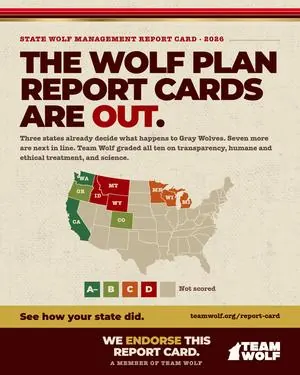
The wolf plan report cards are out.
The report cards are out.
Ten states. Not one A.
We expect a different report card next year.
Time for the states to go back to wolf school.
Wolf advocates demand state accountability.
Team Wolf graded the wolf plans.
Explore the new Team Wolf report card.
Agency and governor accounts

Tag the people who decide.

Every account comes from the agency’s or governor’s own .gov page where one exists, checked against the live profile. A dash means we couldn’t find an account. N/A means we couldn’t confirm an official one. Check it’s the account you mean before you tag it. Tag, don’t collab.

Before December 3

Congress can keep wolves protected. Ask yours to.

On December 3, the Interior Secretary decides whether Gray Wolves and Mexican Wolves lose federal protection. Congress can protect them by law instead. The letter takes two minutes.

Send the letter to Congress →
Take Action →Join